Thursday, April 10, 2008

Ed Kills a Nazi

(Here's part of a novel about my hometown that I've been working on for years. Someday I hope to finish it. Repost.)
Portion of PORT CITY
copyright 2008 by James Robert Smith

Ed stood in the dark of the barn and ancient scents of old hay and horses and rich manure long gone floated up in the dust. The Nazi's jeep had come to a halt in the wide door and the lights were still on so that they could all see. Ed pumped the Coleman lantern and the wick began to glow with an almost supernatural incandescence. There was a slight ratcheting of steel as the jeep doors opened up and the pair of racists climbed out, their booted feet settling into the dirty sand, crunching down on the nubs of broken sandspurs and beggars lice and other weeds. Ed's right arm pistoned a time or two more, his great biceps filling with blood, coming to a pump as the muscles had been trained to do through constant, brutal exercise.

"You boys can shut them headlights off, now. We won't be needin em and I don't want nobody noticin us through the woods and comin down to see what we're doin here at night." To prove it, he lifted up the Coleman lantern, its glow dispelling the shadows to vague corners of the old barn. In obedience, the head Nazi reached through the door of the jeep and slammed the light switch down; the jeep ceased to glare at Ed.

"While you're standin over there, go ahead and shut the barn door." Again, in silence, the big Marietta Nazi grasped the old, weathered wood and pulled the heavy door to. Ed figured by then that he followed his orders right well.

The other two came on into the barn, the smaller men as if facing off against Ed. He wondered if they could feel the hate burning off of him; but he doubted it.

"This here's Ed Jones," Tow said.

"Nice to meet you, Ed." The big shot Nazi didn't offer his own name.

"Hello." Ed's face in shadow despite the blazing lantern. His eyes maybe lit from something other than the Coleman.

The Nazi looked around the barn. Most of the contents had been removed before the farm had been abandoned, and thieves and kids had long since ransacked whatever had remained. A disc plow gone almost completely to rust deteriorated at the rear. The horse stalls were stacked with graying lumber of various lengths and dimensions, and straw gone from gold to pale yellow was scattered here and there. The fine dust in the corners was everywhere pocked with the inverted cones of ant lions lying in wait for six-legged meals. Spiders moved and crawled in the joists overhead, in and out of webs.

"Well," the North Georgia racist finally said. "We got some business to conduct here, so let's get to it. My friend, Phillip here, says that you have a large amount of marijuana which you are willing to let go for a bulk price."

"At's right," Ed told him.

"Exactly how much are we talking about here? In kilos."

Ed placed the lantern on the floor of the barn where it settled in an inch or two of powdered filth. "I ain't got the slightest idea how much in kilos we're talkin about here. What I got is an entire bale of weed."

The Nazi smiled. Ed could see his chiseled face wrinkle in the weird light. "And how did someone like you come to be in possession of that much contraband?"

"You want to buy it?"

"Hell, yes, he wants to buy it!" Tow spoke up, sounding more strident than he probably had intended, trying to impress the right-winger.

"Well," Ed crossed his thick arms, the muscles accentuated and exaggerated in the glow of the lamp. "It really ain't no concern of yours how I come by it, so don't ask. I've got it and I want to sell. Never mind where it came from."

The Nazi cleared his throat, but he didn't spit. "We just want to make sure that we're not buying merchandise that might belong to someone who might take offense at our purchasing stolen property."

"You ain't got to worry about that. I got it fair and square, and ain't nobody goin around sayin it's theirs and not mine. So don't worry about it.

"And anyway, what is it that J.C. Steiner wants with a pile of marijuana?"

Marietta man wiped his mouth. Ed could hear his callused hands rasp on stubble. "Well, I'm on tell you. You want to make a profit, and we want to make a profit. You got to make a livin' and we got niggers to kill. Takes bullets to defend the white race from niggers and Jews."

The Nazi just stood there for a second, and then he asked to see some of the stuff. Ed reached into the deep right pocket of his overalls and drew out a huge five-finger bag of reefer, stems and buds and leaves the color of green-pea soup. The Nazi moved over to where Ed was, the lantern between them glowing like some magic doorway you had to know the secret word to pass through; he peeled the flap of the sandwich bag free and dipped his nose to sniff. Almost as strong as the pungent scent of weed there was.

"Diesel," he said. "You found this shit washed ashore, didn't you? How much you find, son?"

"Plenty."

"A bale, plenty? More? You found yourself a whole bale? Do you know who tossed it overboard? You think they might want to know where it is?"

Ed stood there, blank faced, the color draining from his flesh. In the weird light, the Nazi could not see the warning sign. Ignorant, he continued to talk, now hoping to scare the yokel into giving away the contraband.

"There's suppliers who might not think this is your dope, son. There's boys out there just as soon have this back."

"They threw it overboard when the Coast Guard was chasin em," Ed droned. His voice was starting to go shaky, and the Nazi mistook the warble for fear. "It's mine, now. I found it. I dragged it across the beach. I loaded it up and hid it. Ain't nobody's but mine."

"You know, Ed. You look like a white man. You talk with a fine southern accent and Tow tells me you born and raised in this great state of Georgia. But he also tells me you a nigger lover. Why you want to be a nigger lover?"

Ed's face had gone almost completely to white, nearly no color there at all. In the white glare of the Coleman wick, though, neither the Nazi nor Tow could tell. Ed said nothing, for to speak would have been to act, and to act would have been to kill two men. He swallowed, and then the Nazi put his hand out and patted Ed's gigantic shoulder, all muscle and solid as a grizzly's neck.

"Just jokin son. No call to get choked up. Why don't you just let me see the bale and we can begin to talk some numbers. What say?"

Ed looked across the barn. Tow was still where he had been; only now he was leaning against the barn door. He looked like a guard standing there at the exit. "Wait here. I got to climb up and haul it down for you fellahs to see."

"Fine. Fine." The Nazi smiled and patted Ed once more, as if feeling to test again this inhuman flesh.

Leaving the lantern, Ed walked across the barn to a shadowed rear corner and put his hand on the dry, flaking wood that made the ladder. He climbed up, his sneakered feet making heavy scraping sounds. Old nails groaned beneath his weight but he paid them no mind. On the floor of the loft, he swatted at trailing webs and seemed not to feel at all the tickle of spiders that dashed along the flesh of his back and exposed shoulders before launching themselves off of the giant.

Below, the Marietta Nazi saw Ed's face appear from the lip of the loft, his face white, white as an avenging ghost. Two lengths of nylon rope, frayed and yellow, drifted down in slow motion. "You and Tow grab holt of these," he said, his voice quaking. "Y'all hold these and we'll ease this son of a bitch down for you to see."

He looked to see that the two did as he requested, both men standing about three feet apart, gripping the tethers. Then he vanished into the dark beyond the edge of the loft.

Beneath his flannel shirt, laid in tight to his ribs, the Nazi felt the holster of his little 9mm Beretta chafe against his cotton tank. He smiled at Tow, and Tow smiled back. Above them, they heard the small grunt that escaped through Ed's clenched teeth, and they barely noticed how the loft groaned above them, nails and old staples doing the suddenly damned difficult job to hold tight.

Up there in the shadows, the figure of pure rage lifted up the bale, hundreds of pounds, a goddamned miracle like some crazed mother levering a mass of steel off of her trapped child. Inside Ed, somewhere in his back, ligaments stretched, muscles painlessly tore, and the bale somehow like one of Hercules' tasks went over his head and he stutter-stepped to the edge of the loft and not really looking down dropped the enormous weight on the two fools who stood holding nautical rope attached to nothing save a heavy beam.

Below, he heard the bale come down with a soft thud, amidst the earthen sound a dry popping. Or two. He went to the edge and looked. A great gout of dust full of fine sand and horse shit gone to powder. As it settled, he saw legs jutting out, the yellow nylon ropes dangling down. The Nazi's fingers were splayed, his right hand, on the far side of the bale. A stream of urine was creeping out first between the Nazi's legs and then Tow's. Ed screamed. "Mother," pause, "FUCKERS!" He leaped down, his two hundred and fifty pounds landing solidly atop the bale, his knees locked even after a plunge of eight feet; he barely felt the sting of impact in his heels. Something beneath popped like a hard, unripe watermelon taken too soon from the vine.

"GotDAMNED shits!" He stomped on Tow's calf jutting out from the diesel-y bale. He did it again, the rage not gone yet, the adrenaline still pouring through his system. His mind was effectively shut down, and everything he saw he saw through a haze of red. The barn was a big red screen upon which were scrawled wooden beams and discarded lumber and old straw and dust floating lazily in the dead air. Ed gritted his teeth, grinding them, his jaw muscles bunching and clenching and he had bitten his tongue and the insides of his mouth so that blood was seeping in through little cuts leaving that coppery taste.

And then he saw what he'd done.

"Oh, god. Shit," he said.

The bale rested atop Tow and the nameless Nazi. Both were dead. A smell of spewed urine was rising up from the bodies, and in the seat of Tow's jeans Ed could see a soft round bulge of feces excreted beneath the weight of baled weed. There was also the stench of human excrement just beginning to pollute the close air of the barn. Ed smelled it through the diesel and the dope. Not far from one corner of the bale, the Coleman lantern burned on, showing the deed. "Shit."

Ed put his hand out, feeling the tight, dry burlap that held his marijuana together. Fifteen grand if he'd sold it by the pound. More if he'd been patient and let it go a quarter of a pound at a pop. Forty thou if he had set up shop somewhere and sold lids and dime bags and reefers to kids and skinflints. He looked around him. In the shadow of one of the old horse stalls he saw the edge of a croaker sack jutting up from a pile of dry-rotted two by fours. He went over and picked it up, felt to see if it retained any strength in its moth-y fibers. It was solid.

He shuffled back to the bale, reached into one deep pocket and drew out his pocketknife, the one his daddy had given him the year before he'd died. "A good pocketknife can be a lifesaver," he'd said. The bale sang a short, ripping song as he plunged the blade home, opening up the burlap skin to expose the leafy flesh beneath. Ed reached deep, jamming his monster arm in, far down where the diesel had not tainted the stuff, and he began to fill the sack. He reached in, drew out the stuff, dropped it in the sack, reached in, drew out, dropped in, reach, draw, drop.

When the sack was full, he went to the barn door, and he peeked out. Nothing moved except for the weeds in the warm breeze. He bunched the mouth of the bag together into a pucker and put it in the front seat of the Nazi's jeep. The keys were still in the ignition. "Thank you, fucker," he said.

Going back into the barn, Ed picked up his lantern and slowly turned the wick down until the light dimmed and dimmed and then was a tiny orange glow that lit nothing and then was gone. He put the lantern down, and in the pitch dark he drew out the book of matches and struck one, sulfur against rough. A tiny stink of what Hell was supposed to smell like and then a quick yellow flash. He waited while the flame ate the matchstick and grew fat. Then he bent carefully at the waist, feeling a twinge in the base of his spine, hardly noticing it, and he placed the plump little orange babe to the bale. The babe grew and made a twin of itself so Ed went to another spot on the bale and touched it again, made a triplet, then down and another sibling appeared and another and another until the family was crackling and popping having a party. Ed backed away, picking up his extinguished lantern, watching as the fire rose up and began reaching for the timbers and he could see Tow's rawhide belt steaming and the Nazi's pants catching fire and the bale was a great big gout of flame hissing out a tale of nastier things to come, arms reaching up and up sending fat yellow sparks to the loft which erupted with a low roar.

Ed went out the door and slammed it shut behind. From out there, you could see the sun inside the barn trying to get out. Thin lines of fire flickered and roared in there, saying that they were about to jump out, to cover the exterior of the barn and give off a show such as this old forgotten farm had never seen.


And when it did, when the barn went up like a ball of Hell, Ed was gone, taking the Nazi's jeep with him, taking it deep into the woods down logging roads thick with sassafras trees and post oaks and slash pines standing up like poles amidst the palmetto. There he left it, the keys hanging from the ignition, waiting for the next driver. An hour later, he was in the front of his pickup, the sack of dope stuffed behind the seat and his lantern on the floorboard.

And then he was home.

The next morning, black children, whose families had seen the orange glow of the burning barn in the night, came through their secret paths and they poked about in the cooling ashes. One of them found a little blob of silver, never knowing that it was silver, or that it had once been a twisted swastika.

Nothing else. There was nothing else except for vague, dark ashes that had ceased to smolder waiting for rain.

Sunday, April 06, 2008

First Magnitude

When I was just out of high school back in the haze of the 1970s, I discovered Ichetucknee Springs in Florida. It's what's known as a first magnitude spring. Hundreds of millions of gallons of pure, fresh water welling up from the limestone underpinnings of Florida to create whole rivers that flow clear as fine glass for dozens of miles. Spending a day or a weekend floating and swimming and exploring these places is nothing less than a pleasure at its purest.


Since my wife and I spend the Lion's share of our vacation time in the mountains, we try to vary the leisure menu with a trip to the low country. So, in a few weeks we're heading down to Blue Springs State Park not far from Orlando. We won't go to Orland0--you can keep that urban blight and the amusement parks for yourself, thanks--but will spend our days exploring Blue Springs, the St. Johns River, and various other first and second magnitude springs in the central Florida region.

It's what we do.

Wednesday, April 02, 2008

Tuesday, April 01, 2008

Into the Gorge!


I’ve heard it quoted fairly often (including by folks as the US Forest Service) that Linville Gorge is the most rugged area east of the Rocky Mountains. Having hiked the Appalachians from Katahdin (Maine) south to Wade Mountain (Alabama), I have to admit that Linville Gorge certainly is as tough as anywhere I’ve ever been. The Whites are indeed a challenge, as is Baxter State Park, as are parts of the Great Smoky Mountains, and the Black Mountains are about as tough as they come.


After those horrible fires in 2007 the Gorge looked awful in some places.

But my first foray into the Linville Gorge was a wake-up call. I’ve had hikes kick my ass in the past, but the trails down into this deep, narrow canyon were the most physically challenging and toughest in memory. The scenery is also on a par with what I’ve experienced in the White Mountains of New Hampshire and the Longfellow Mountains of Maine. Again, the eye candy may even surpass those ranges. I’ve seen higher walls, but never in such abundance. I’ve seen eastern rock, but never so much of it running north to south along an extremely deep gorge.

The Linville River has sliced an astounding wound into the Earth here. In places it’s more than 2,000 feet deep. Further enhancing the experience of seeing this, it maintains that depth for miles along the course of the river from the northern end to where the canyon finally gives up to the foothills and Piedmont in the south.


For some weird reason my hiking experience in Linville Gorge has always been very brief and shallow. In years past I would spend my short visits to the area standing at overlooks and peering down into the gorge, and just a couple of half-mile hikes into the gorge itself to see the powerful Linville Falls which lie at the northern edge of the canyon. I have to admit that I was generally occupied in bagging peaks elsewhere than seeking solitude and scenery inside the most powerful canyon in the eastern USA. I was robbing myself, I now reckon.


Since I had missed a dayhike into the gorge with friends two weeks before, I figured to take advantage of a rare two days off from work to ride the short two hours to Linville Gorge.
(Again, with the place so close to where I live, I cannot really explain why I have spent so much time avoiding it!) To do anything much of a loop hike in the gorge, one needs to have some kind of shuttle set up, be prepared for a long road hike (which I loathe), or do some backtracking. As I am so far unfamiliar with the gorge, I chose to do a short in-and-out backpack that would take me quickly to the bottom of the canyon where I could set up camp, do some exploring, and a return hike to my vehicle the next day.

I’d heard that there were some spectacular views along the Pinch In Trail, along with some top-notch campsites near the intersection of that trail with the Linville Gorge Trail. So it was an easy choice for me to pick that one. I left home a bit later than I’d intended (almost always the case) and arrived at the trailhead around 11:00 am. I found the parking lot along the Kistler Memorial Highway (it’s a dirt track more suited to four-wheel drive than what one normally assumes to bear the title “highway”) to be empty. The first thing that I noticed as I prepared my backpack was that it was really cold and overcast, and that there was ice on the surfaces of limbs more than a few inches off the ground. At first, I was afraid that the ground would be iced over and that I’d have to abort the hike (since I hadn’t brought my yaktrax along). But I soon realized that the ground was wet and that the temperature was rising even as I prepared to hike down.

The Pinch In Trail has a reputation for being one of the roughest in the gorge, with possibly only the Rockjock Trail surpassing it in general ruggedness. The trail passes into the forest out of the parking lot and soon begins to descend at a not unreasonable rate. Suddenly, though, I came out of the woods and into the burned area from the severe forest fire of last year. This was an especially intense fire during a terrible drought and the fire burned not only the tree cover, but also succeeded in igniting and burning off some of the forest loam. Any worse, and the fire would have burned right down to the mineral soil. As it is, I think the forest is going to have a tough time of recovering. Time will tell.


Despite hiking through the burn (a natural event, after all), one is almost immediately struck by the fantastic scenery lying to the north and south. I kept stopping along the trail to seek out views on the exposed cliff tops, with each few yards finding views to rival or exceed the ones that had stopped me in my tracks minutes before. Soon, I found the trail descending at a more and more tremendous rate, moving down into soaring rocky canyons and passing beneath and beside towers of pale stone. The hiking is hard on your legs, but pleasing to the eye. At one point, peering down beyond a tower of rock that stands in the way of the trail, I could see the route of the Pinch In Trail following the contour of the ridgeline that dropped precipitously toward the Linville River.

At around this time, I began to be able to hear the roar of the still distant river. Even standing more than 1200 feet above it, I could feel the power of the engine that had sliced this canyon into the seemingly solid rock. I shouldered my pack and continued on, moving through the severe burn area and dropping down into the parts of the forest where the fire had finally lost its impetus. Even with a living canopy above my head, I could see the carbon black remnants of the fire that had somehow been brought to heel as the flames got down to the river. Perhaps earlier fires had used up much of the ground fuel. I don’t know. But I can say that the power of the fire was spent by the time it reached within a few hundred yards of the river, and the trees in this part of the gorge were not consumed.


The intersection of the Pinch In and Linville Gorge trails leaves you with two choices: north or south. I looked at some extremely beautiful campsites to the north (within ¼ mile of the intersection), and then went south to see what was available. I located a great, level campsite with a huge stone fire ring and a bench someone had cobbled together with a river-washed plank deposited after some storm, and supported by logs. I chose this spot, as it was not only the most pleasing to my eye, but had the great plank bench for cooking and meditating.


Normally, I would never build a campfire in a wilderness area. I have actively discouraged others from doing this, too. But for some reason I felt the need to build a campfire. Maybe because it was a good bet I was the only person in the gorge on this Sunday, late March evening, or because it was such a well-used fire ring. Or maybe because I felt like being a hypocrite. I can’t say. I will admit that this is the first campfire I’ve built while backpacking in over twenty years.

In short order I had my tent up, my stove ready for cooking later in the afternoon, and the fire going. I scouted around for firewood (the river leaves it in abundance along the rocky banks), piled it up high, and went to scout out a spring for filtering water which I found not far north of the intersection of the two trails. Later, after I’d cooked my supper, stored everything away, and hoisted my food bag high into a tree (this is bear country, in a major way), I grabbed my camera and went on a sight seeing trip north on the Linville River Trail.


What struck me first of all is that almost all of the big hemlocks are already dead from hwa infestation. I’d expected that, but it’s still shocking to see my favorite evergreen going into
extinction. Weirdly, one of the first things that happens to a big hemlock when the bugs have sucked it dry and it dies from starvation, is that the bark sloughs off and one sees the under layer of the bark red—almost like raw meat standing bloody. See what we’ve done? Alas.

I found some fantastic views along this part of the trail, but as the day was drawing to a close, I headed back to my campsite and built up the fire. Soon, I had a really tremendous blaze in the fire ring and I was tossing on logs that I would have assumed far too large to burn effectively. The fire gobbled them right up, though. I made a few more trips to the riverbank to gather more firewood for the night and returned to meditate, just gazing into the flames. Soon, though, I had to realize how tired I was and I retreated to my tent. As I was lying there, preparing to huddle in my new down bag (first time I’d used it), I peered up through the door of my tent and realized that I had set up directly beneath a hemlock tree. A few needles were hanging on, and I could see them against the fading twilight of the cloudy sky. A twin twilight for me to see: that of the day, and of all hemlock trees in the east.

The night went quietly, and I slept a good ten hours! My sleeping bag kept me warm, but I have

to admit that the cotton bag liner I’d bought went a long way toward making the sleep more comfortable. It was nice to pull the cotton liner up around my shoulders during the coldest parts of the morning and feel the extra warmth.

After breakfast (a nasty Mountain House concoction), I methodically packed up my campsite. I’d used up all of the water I’d brought with me and knew I’d need some for the steep climb back to my truck, so I stopped at the spring I’d located the day before the pump some water with my new filter (MSR Sweetwater). The pump worked great and I soon had two bottles filled for the brief, but extremely steep hike back up.

During the night the clouds that had stayed high the day before had come down much lower. While before only the highest peaks had been in the clouds, now the mists had descended to around 2500 feet or so. Thus, the tops of the gorge walls were all but invisible as I pushed on and on along the Pinch In Trail.

A winter of not much hiking had really done me no good. Fifteen pounds heavier than when the season began, and loaded with a 40-lb pack, the one and a half mile hike took me an hour and fifteen minutes to climb. And it was a very rough climb. Some people think that the Pinch In Trail should be abandoned, as it’s extremely steep and, worse, succumbing to erosion in a way that makes portions of the trail not much more than a ditch where storms can dig deeper and deeper into the ridgeline. If the wilderness aspect of the area precludes any engineering on this trail, then it should probably be abandoned to the heavy foot traffic it absorbs now.

Finally, much wetter (from perspiration, not rain), I arrived at the trailhead and my truck. By this time my thighs were screaming and it felt great to shed my pack, towel off, don a fresh

shirt, and climb into the seat of my vehicle. I wanted to get in another brief day hike before I started back, but when I arrived I found the entire area (higher on the northern end of the gorge) to be completely socked in with very thick cloud cover a slight mist. As I had wanted to do the hike for the views, I decided to postpone it for another day and I headed back home.

Where I promptly showered and fell asleep again for a five-hour nap!

Saturday, March 29, 2008

My Dad's Favorite Book

My dad's favorite book was THE RUBAIYET OF OF OMAR KHAYYAM (English verse by Edward Fitzgerald). He knew the book intimately and could quote from it endlessly, and enjoyed doing so. Sometimes I would be riding along some country road as my dad drove his pickup truck, neither of us sure just where he was taking us, just exploring the huge state of Georgia. And he would break into a recitation of this or that verse of the RUBAIYET, and then he would ask me to interpret the verse. I was a fairly bright kid, but not that sharp. I've always figured that I'm smart enough to know that I'm not as intelligent as all that.

But my dad's favorite verse was this one, and one which I never had any trouble interpreting:

"And fear not lest Existence closing your
Account,should lose, or
know the type no more;
The eternal Saki from the Bowl has pour'd
Millions of Bubbles like us, and will pour."

My dad's personal copy of the book is stored somewhere in the house. I stumbled upon it a few years ago, but forgot to shelve it and it's sitting now in that box, under other boxes of books. Until we get a bigger place and I can shelve them all, it will likely remain there, waiting. But I stumbled upon a hardback copy not too different from my dad's copy, and I bought it for fifty cents, and it will do until I can once again discover the copy that my dad himself handled and read those decades gone.

"Millions of Bubbles like us, and will pour."

Tuesday, March 25, 2008

New Family Member

This is Lilly, our newest family member.

The best animal companion we ever had was a cat named Cinnamon. She lived with us for twenty years--pretty much from the time my wife and I were married until Cinnamon died of old age two full decades later. Cinnamon was a very affectionate and extremely intelligent cat, and we always wanted to have another Siamese cat if we could afford one.

Six months ago we met a woman who sold Siamese kittens from time to time, so we put in our "order" for a female kitten. Yesterday we picked up Lilly, a six-week old Siamese. So far, she's been a lot of fun!


Saturday, March 22, 2008

Dammit!

I missed hiking with friends today. Because I wasn’t paying attention to something as simple as a freaking two-line email!

I was to have met friends to ride to Linville Gorge to hike down to a place called Daffodil Flats. Just glancing at the email, I assumed I was to have met Andy at the same place as our last hike so that we could carpool to the trailhead. Last time we met at 7:00 am. I didn’t pay attention and, sitting there for 30 minutes without a cell phone, I assumed something had happened and he couldn’t make it. So I drove back home.

Where I discovered, paying attention this time to the email that we were to have met at 7:45.

Depression rests with me today.

Friday, March 21, 2008

Political

I rarely write anything overtly political here. I just try to observe and comment about things that are important to me in my life, which are rarely overtly political--only subversively. Take the following for what it's worth without further commentary or judgment from me:

I left the house very early the morning of March 20 and went by McDonalds to get breakfast. I sat down to eat in the restaurant. It's in a poor neighborhood, but for some reason all of the clients this morning were poor white people. They were talking about Barack Obama, who had just visited the city where I live (Charlotte, NC). I observed the following quietly from my seat as I ate alone.

"Are you going to vote for Obama?"

"Hell no!"

"No way!"

"I'd die first!"

Then they all started chatting again.

"You know Bill's coming to town?"

"No!"

"When?"

"Tomorrow."

"God, there was a President."

"I wisht he was our President now!"

"Lord, yes!"

I swear to Jove. Pretty much quoted verbatim.

Monday, March 17, 2008

Hiking back into Winter.


The Pinnacle, in the Black Mountains, seen from Snooks Nose.

Considering my post from a few days ago, this one may seem ironic. But to Hell with it--here it is.

I went on a seven-mile hike with my pals Andy and Bob. This would have been a most confusing hike if my son had come along, as then there would have been two different Andys and Bobs along. But my son, Andy, chose to stay home when he learned the hike involved a vertical climb of about 3300 feet in less than four miles. “Screw that,” he said. Wise words, perhaps.

The trip began eventfully, for as we left I-40 and took the Forest Service Road leading to the Curtis Creek area of the Pisgah National Forest, we spied the largest flock of wild turkeys any of us had ever seen. I suspect about fifty birds. Andy pulled to the side of the road where we could gawk, take photos and videos and keep exclaiming how it was the most wild turkeys any of us had ever seen in one spot.

We then continued the short drive to Curtis Creek where the National Forest has an excellent campground suitable for tents and travel trailers. Several trails lead into the high country from this spot, including the one we were going to use: The Snooks Nose Trail.

While the temperature was quite comfortable at the trailhead, I had asked Andy if he thought I’d need a scarf. He thought not and I agreed and left it in my truck. Alas.

The trail begins innocently enough, climbing the slopes above the Curtis Creek Campground at a reasonable angle, but soon it becomes apparent that the trail engineers were either mountain goats or insane or diabolical; perhaps all three. For the track soon begins to tackle the mountain head on with no switchbacks or an attempt to find a milder gradient.

We passed through forests of beech and hemlock and poplar and oak and pines. A strange and oddly spectacular waterfall lies to the right of the trail on the way up—consisting of what is, for all practical purposes, a natural waterslide well over one hundred feet in height. However, due to the close growing vegetation (mainly rhododendron), we found it virtually impossible to take a good photograph of the feature.

Did I mention that the trail is steep? Indeed, it is extremely steep. But there was nothing to do for it but put your face into the mountain and slog upwards. Ever upwards. We discovered that there were two extremely long and steep pulls with only a short distance of mild hiking between them. Otherwise it was just a thigh-burning, lung-bursting effort to achieve the ridgeline. After some time, we made it to the first of the peaks—a rocky outcropping called Snooks Nose, and the namesake of the trail. This was a really grand place to see the surrounding peaks. To our right was the huge double peak of Mackey Mountain, and to our left was the Blue Ridge Parkway and the beginning of the Black Mountains visible beyond it.

The open area at Snooks Nose.

After taking several dozen photos we pushed on, achieving the top of Laurel Knob after a long and arduous climb. By this time, we had climbed 2,500 feet. Laurel Knob is a relatively prominent peak of roughly pyramidal shape, but there’s not much of a view from the summit. Its main claim to fame is that it is home to quite a number of acres of old growth forests with some truly impressive specimens within those groves. I hope to return to this area in the future to bushwhack to some of these trees—one of them being a poplar that is said to the be the largest of its species in the entire Pisgah National Forest.

Laurel Knob, viewed from Snooks Nose.
From there, we descended very briefly into a shallow gap and began another more moderate ascent to the Blue Ridge Parkway. Pausing again to drink some water and take a few photos and don our jackets (it was getting noticeably cooler as we neared the 5,000-foot elevation), we walked down the Parkway a hundred yards or so and caught the trail that would take us to the top of Green Knob.

The cool observation tower on Green Knob.

At the end of the climb of a couple of hundred vertical feet, the observation tower of Green Knob came into view. It’s quite an attractive structure of simple design. It once had a series of large glass windows in it, but these of course have been shattered out by assholes and idiots. As we climbed the tower stairs we felt the biting wind and realized that we had not merely hiked about 3,300 vertical feet, but had also hiked from early spring into late winter. Standing on the catwalk of the tower I peered across at the looming mass of the Black Mountains, shrouded in clouds, and realized that the upper elevations across the gulf were frozen in rime ice.

It was cold!

We hunkered down inside the tower room and got out the lunches we’d brought along. I drank lemonade and ate a roast beef sandwich. I fed our canine companion, Saucony, some cheese and we poured her a couple of dishes of water while Andy fed her some yummy dog biscuits.

Trying to stay warm in the observation tower.

Our intention had been to linger on the summit for about an hour, but it was so cold none of us felt comfortable up there. The wind was biting and the temperature was just too damned low. Even my hands, beneath my gloves, were growing numb with the cold. So we packed up and headed back down to lower elevations and warmer temperatures.

The hike back down was a bit dicey, as we all slipped several times on the extremely steep slopes. These kinds of trails are actually easier hiking up than down. They’re hard on your toes and the risk of falling is high. In fact, Andy fell twice and I came close to tumbling several times.

But, in short order, we were down the mountain and back at Curtis Creek where I scoped out the campground for the probability of a future trip with my travel trailer. I look forward to returning to that area to search for big trees as soon as I can make it back there.

Safe back down at Curtis Creek where we were at only 1800 feet and where it was warm.

Sunday, March 16, 2008

With the Dog

A few weeks ago I went hiking with a dog. Her name is Saucony. Twelve years old and diagnosed with cancer, she kept up with us all along the hike and kept me amused. I hadn't been hiking with a dog since I was a kid. I didn't realize how much fun it is to have a dog along on a hike. Sure, they scare away the wildlife, but I don't like surprising wild critters anyway.

Tomorrow I'm going hiking with Saucony again. And the guy she lives with, Andy Kunkle. I'll report how it all goes.


Saucony, on the top of Scaly Mountain, NC. The old girl was tuckered out.

Friday, March 14, 2008

Stopping and Starting

Sometimes when I post responses at other blogs, I hit on themes about my own life that I find myself repeating here.

I was responding to an excellent bit of art at Mia Wolff's blog that sparked some memories:

I used to do all kinds of art. Pencil, pen & ink, charcoal, some soft material carving and clay sculpting. When I hit my early 20s I stopped all of that (cold turkey)to concentrate solely on writing. I'm not sure why I did that, and sometimes I'll feel the urge to take up the charcoal, which was always my favorite.

I only tried color once--painting a landscape at the age of 16. I was so horrified at my inability to mix colors that I never tried it again. Even my art teacher was horrified at what I had done, as I was the best pencil artist in the class.

My one effort at carving soft material was pretty satisfying. A kind of soft plaster that my art teacher mixed up when I was taking classes at the age of 13. I carved a bear and it turned out really nice. Again, I never went back to that. Can't say why.


Similarly, from about the time I was 18 until I was in my late 20s, music was a big part of how I enjoyed my leisure time. I had music around me almost all of the time during those years. One of my favorite things to do to relax as to retreat to a dark room and meditate while music played. It didn't really matter what was playing--Borodin or Rolling Stones. It didn't matter, as long as I could think about the music and just drift with it and think.

And then, suddenly, pretty much without my noticing it, I stopped listening to music. To the point where music bothered me. If a radio was on, I'd turn it off. I never played records at all, and my record collection languished and gathered dust in bins and peach crates stored in closets about the house.

It was only when I discovered Napster in its legal but outlaw days that I started listening to music again. Those were great days for me, and I built up an enormous library of music that I listened to for hours and hours, recalling old familiar tunes, and making new discoveries.

And even though Napster, and then WinMX were closed down forever, I still listen to music far more than I did during the days when it was absent from my life, but not so much as in those times of Napster, maybe the only true example of communism that I've ever witnessed.


Old Napster. Jove, how I miss it.

Thursday, March 13, 2008

To the Memory of Southern Snow

When I was a kid living in the mountains of northern Georgia, I'd talk to old-timers who had already begun to notice that it just didn't snow as much as it used to. This is what the corporate bosses like to call "anecdotal" evidence, dismissing it with a sneer.

The entire time I lived in the northern part of Georgia near the NC/TN border, it snowed only once in three years at the elevation where we lived (about 1400 feet). Often we would look up at the higher peaks at 3,000 to 4,000 feet and they would be covered in deep snow and ice which generally descended no lower than about the 2,000-foot elevation.

In those days, Georgia had the southernmost ski resort in the USA. It was called Sky Valley and would get enough snow days to make it worthwhile to open a few runs during the winter. But as the years advanced, it snowed less and less in the southern mountains of Appalachia. In years past, the mountains of Georgia would often be snowed under during the winter months. Now, though, something was happening. The days of looking up at the tops of the Cohutta Mountains and seeing those 4,000-foot peaks frozen in winter storms were becoming more and more rare.

In 2005 the Sky Valley Ski Resort closed its doors for good. As a ski resort. They continued to promote the place as a golf resort and housing development, selling second homes to the moderately wealthy and retirement homes to older folk. The snows have just about fled, and it's rare now to see a good snowfall in Sky Valley, Georgia. Oh, you might see the ground get coated in white from year to year, but it rarely lasts for more than a day before melting off. And there's no way that there is enough snow to supply a ski run; and not even enough cold nights to allow the making of snow with blowers.

So the idle rich have their golf courses as they plow up more and more forest land to build second homes. And they have a place to drive to from Atlanta and Chattanooga so that their big SUVs can belch ever more smog into the air. And the power lines criss cross the mountains, bringing electricity generated by coal-fired plants, spewing vast tons of carbon into the air.

And the madness goes on.

Here's to the fading memory of snow.

Rabun Bald, (seen from Scaly Mountain, NC), second highest peak in Georgia at 4,696 feet on which used to sit the Sky Valley Ski Resort. Alas

Wednesday, March 12, 2008

Waterfalls in western NC

Gettin' antsy to go hiking again.

Here are some videos from my last trip:


Silver Falls


The Upper Silver Falls (above the lower one, naturally.)


The Lower Falls of Scotsman Creek

Monday, March 10, 2008

Amazing Tree!

Today I returned to the patch of green to measure the old giant:


It measured an amazing 18 feet and 3 inches in circumference. It's not a typical tree, with three tops sprouting from a main trunk (and may be, in fact, two or three fused trees), but it's still an amazing sight to come upon this huge tree in such an urban environment.


Navigating

Saturday, March 08, 2008

A Patch of Green


I'm going to head back as soon as possible and measure the circumference of this tree.

Well, I was able to wander into a patch of old trees on my route
today. From what I've been able to gather, it was spared from being bulldozed because someone noticed that it was the site of a slave cemetery. The right folk fought the developers, had the land declared some kind of historic site, and thus the trees have been spared.


I had noticed for a long time that there are some big trees in there. Not least because one of the trees visible from the street is a bottle- shaped poplar large at the base which quickly tapers. Looking at the grove, I could tell that there were some even larger trees partially hidden.

The graveyard? Not certain, but level, free of trees, and covered in ivy.

So, today, on my lunch break, I took my camera and wandered in there. I should have taken my tripod, but I didn't and had to make do by finding sapling and bushes on which to balance my camera when I wanted to put myself in the photo for size reference. There were some very big trees in the grove, especially one poplar which appears to be fused from two or three trees. Its circumference is ridiculous at breast height, and I'll return to record it as soon as I can.

Things like this are always amazing to me. To think that these huge old trees exist in the midst of a vast, urban sprawl is both amazing and pathetic.

Surrounded by urban sprawl, a tiny patch of old trees.

Friday, March 07, 2008

OOP

In publishing "OOP" is the abbreviation for Out of Print. The Five Star version of THE FLOCK will soon go out of print. I've stocked some up, so it'll be available from me for a time. I'll be selling autographed copies via Amazon.com. Both Amazon and B&N seem to have it still in stock for the time being. My agent is currently shopping the mass market paperback rights around.

Tuesday, March 04, 2008

The Pull of Dirt

Well.
 
You live your life getting away from a place. You live there and grow there and are familiar with it...and face it--familiarity breeds contempt. It's true.

But you go back. There's the familiar. It can feel good to go back to a place, especially when there are a host of good memories that do a fair job of covering up the bad times. It can seduce a fellow.
 
Just about any place has its charms, I'm sure. My dad spent a good part of the later years of his life doing his best to get the Hell away from the Georgia low country where he was born and raised. And what the heck? He ends up back there at the end of his mortal coil.

I recall my father and my cousin Gene standing beneath the Glynn Oak, where it's said that Sidney Lanier penned "The Marshes of Glynn". And Gene and my dad gawked and gabbled over the beauty of the place. It was a beauty that I could not see, then. Later, I could and did, but just at that time I couldn't give a rat's ass about the marshes. And to hear my dad waxing all droopy-eyed poetical and softy over the place--well, it shocked me. The man who generally had nothing but ill to say about the land that was the bosom at which he had sucked.

It's passing strange, the pull of dirt.

Home is where you make it. And you're best served to make the best of things where you are. I can recall my dad champing at the bit to get up to the mountains of North Georgia where he thought the people would be different--where they'd be friendly and have a sense of fellowship. He supposed, I suspect, that there was a magical sense of the egalitarian up in those hills. What a shock he got when he found the mountain men of Georgia to be the most hideous humans he had ever faced. What a great gout of monsters into whose midst he had plunged himself and his family and his future.

The hot, mosquito-plagued flatlands of South Georgia suddenly seemed not so bad, after all. And at least he could understand the dialect and had a sense of what was in the heads of his fellow citizens of Glynn County, even if the mush between their ears was poisonous feces. It was poisonous matter that he at least recognized.

My dad spent the last months of his life having a fair time of it, I think. He reconnected with his nigh life-long best pal, Guy Frazier, from whom he had become estranged for a while. They caroused and I have to say that my dad seemed truly happy when he'd rediscovered his friendship with Guy...one of his old-time revolutionary pals who'd ended up going to work at the Paper Mill and becoming head shop steward and big shot with the Union. Those two did nothing but drink beer and talk politics and go on fishing trips the last few months of my dad's life. I remember feeling totally crushed when they packed up the truck one day to head to Florida to go on a weeklong fishing trip with my Uncle Ersley. And they went without me. It was the first time my dad had gone fishing without me. Man, it hurt. But my dad was happy. I think he dropped dead not ten days after that trip. Good for him for heading off and having a grand time.

Yeah, the old home turf can feel good to a wandering set of feet.

Me--I don't really have a home turf. Born in Brunswick--lived there twice. Done that. Hated it, both times. Lived in Ellijay, and there are some great memories. But the 120 acres is gone--sold off and likely developed (from what I can see from Google Earth). I have no desire to see the 120 acres cut up into four of five "farms" with strangers on my old stomping grounds. It would likely kill me. As for the city of Ellijay--well, it's a land of ignorant, inbred, ultra religious buggerers. James Dickey wasn't speaking in metaphor when he turned Gilmer County and the Cooswatee River into the nightmarish environs of his novel, DELIVERANCE. I have no more desire to venture there than I have of walking into a lion's den covered in bloody ribeye steaks. Decatur, I will visit. Especially now that Mead Road is taken once again by the gentry and the poor are gone.
I don't really have a home turf, as most do. I feel connected to so little. No religion ever fevered my brain. Family ties are all but shattered. I care not a whit for any particular spot I ever lived. (Well, I did love Mead Road--but that was merely a neighborhood.)

The closest thing I think that I have to the feeling most get when visiting a place they think of as “home” would be The South. As a whole. It's my Land. My Nation. I like southern accents. Low country drawl. The Elizabethan gibberish of the mountains. The city-bred accents of the New South. I know what's in the minds of most of these idiots. Their minds are full of crap...but I know what it is. It stinks, and that's okay. It's the way things are.

But that's the size of it.

No more, no less.

Monday, March 03, 2008

A Fantasy Within a Dream Wrapped in Color

One nice thing about my days scripting for various comic book companies is that I still know a few comic book artists from my time in that industry. I met Mark Masztal through our mutual pal Steve Bissette (who tried to get us together many years ago--but just at the time I abandoned comics, unfortunately). Mark bought a copy of my novel, THE FLOCK and, he being a really good comic artist, did a mock cover for a non-existent comics version of my book. Here it is, in all it's wonderful glory, featuring The Scarlet Rogue:

Friday, February 29, 2008

Awwwwwwwww...

So cute it makes you want to puke:

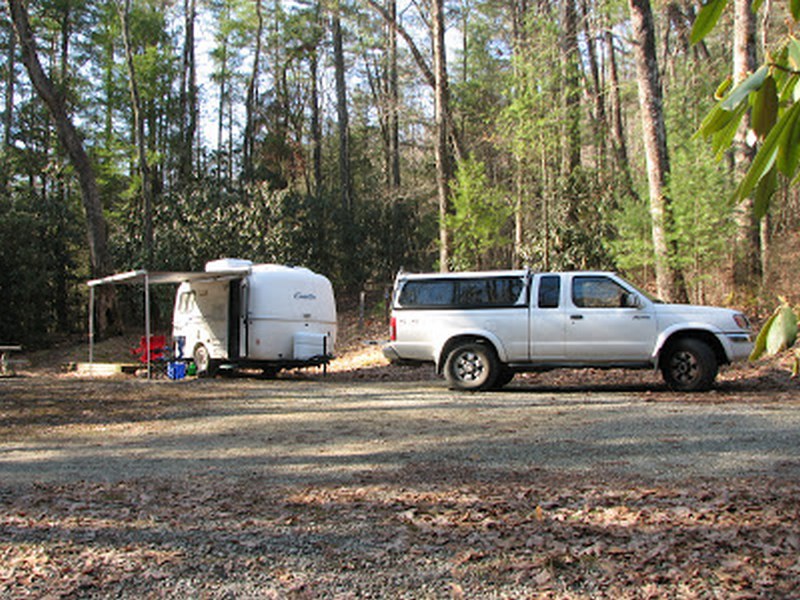
My Casita and old truck at the Ammons Branch Campground.

Tuesday, February 26, 2008

Well Spent Youth


(What I was riding, circa 1967.)

The brightest part of my youth was spent on a residential street in Decatur, Georgia called Mead Road. The entire street ran from Oakview Road on the south and Howard Avenue on the north end. Each end of the street was a terminus for Mead Road, for it did not continue on the opposite side of the streets with which it intersected. The entire street was only a few blocks long, and composed completely of single-family homes (one duplex of which I was aware), a doctor's office (Dr. Levin, my own doctor), and the elementary school which I attended and which was directly next door to where I lived.

I loved that place. I lived there for just a few years--from the time I entered the third grade until I graduated from the sixth grade. I had friends all up and down the street and some from the streets on one side or the other. We spent our days playing in the school fields, in the many patches of woods scattered throughout the area, and exploring up and down vast streams and creeks filled with fish and reptiles and amphibians, many of which we caught and released. I was lucky to have lived in an area that was filled with so many types of salamanders, which we kids were always thrilled to catch and examine and then put back into the creeks from which we'd kidnapped them.

We lived in a rambling house of wood and Stone Mountain granite. The foundation was granite and the fireplace was granite. It was a pretty darned cool place to live. We had a big living room which was more often than not piled to the ceiling with boxes of comic books from my dad's used bookshops. I don't think there was a comic book published between 1956 and 1968 that I hadn't at least looked at, and most of which I'd read.
For a kid between the ages of eight and eleven, it was a pretty goddamned cool place.

Don't get me wrong--it wasn't all fun and giggles. But for the most part I had a really good time being a little boy. My parents bought me most of the toys I asked for, but I never was a greedy kid. I had model rockets and dinosaurs and books-a-jillion. There just wasn't a whole hell of a lot that I wanted and didn't have.
But here, condensed into just a few items, are the things which seemed to me to have been the most important bits of silliness to the child I was then:

I had access to every comic book imaginable. None fascinated me more than Steve Ditko's creation, The Amazing Spider-Man.

I had quite a number of the Aurora Model Kits. Probably about twenty of them. The Superman model was a classic.

You can say what you want about Forry Ackerman and Jim Warren, but the fact remains that they influenced many of the children of the 60s who went on to become creators in comics, prose, TV, and film. Forry's vision was, and still is, seminal.

Yes, TV was a huge influence on me. One of my favorite shows was, of course, The Munsters.

I had several of the Weird Ohs model kits, also. Influenced by Big Daddy Roth, these were all the rage in my neighborhood (and neighborhoods nationwide) when I was in the third and fourth grades.

When I was eight years old my mom handed me this book. I sat down to read it and was scared shitless, amazed, stunned, fascinated, dazzled. I put aside Hugh Lofting and devoted myself to weird fiction for many years.

B.K. Taylor


(Image copyright B.K. Taylor)


Whatever happened to B.K. Taylor?

When I was a teenager, I loved reading his contributions to the humor magazine, National Lampoon, which appealed to my brutish and primitive sense of what was funny. I have to say that I still have a brutish and primitive sense of what is funny, and I was curious about Mr. Taylor’s work.

Apparently, from what I’ve been able to glean from the internet, none of his particularly funny strips from Lampoon are available in book form. Which is a shame, because the material is truly good. I especially recall being amused by his “Timberland Tales”, and would love to read them again without having to dig up back issues of National Lampoon.

I did find one website with which he seems to be involved, but no other details. Someone told me that they think he does material for Mad Magazine and that he wrote, at least for a while, for some TV sitcoms.

When I was about nineteen, I met BK Taylor at the great old OrlandoCon run by Jim Ivey in the day. It was a really friendly comic convention packed into a small dealer’s room and accompanying panel rooms at the International Inn not far from the airport in Orlando, Florida. He’s one of the few artists/writers I ever approached to tell him how much I enjoyed his work. He thanked me and then told me that he was one of two BK Taylors who worked as a cartoonist, but that he was the funnier (and more talented) of the two. Whatever.

Innyway, I was just thinking of the dude and wondering about his past, present, and future projects. His work made me laugh.


(Image copyright B.K. Taylor)

Sunday, February 24, 2008

Frustration!

You know what’s frustrating?

Being about to burst to post some news, but not being allowed to post the news because your literary agent advises against it. That’s frustrating!

Contracts are signed. Every “i” dotted; every “t” crossed. Everything delivered and done.

And you can’t brag, yet.

Alas!

Where's my dignity? I'm sure I left it somewhere around here!