Sunday, November 18, 2007

Back to the Smokies.


We returned to the Smokies for a four-day vacation, staying at Elkmont Campground. Details later. For now, just a couple of shots:

Me and my son at Laurel Falls.

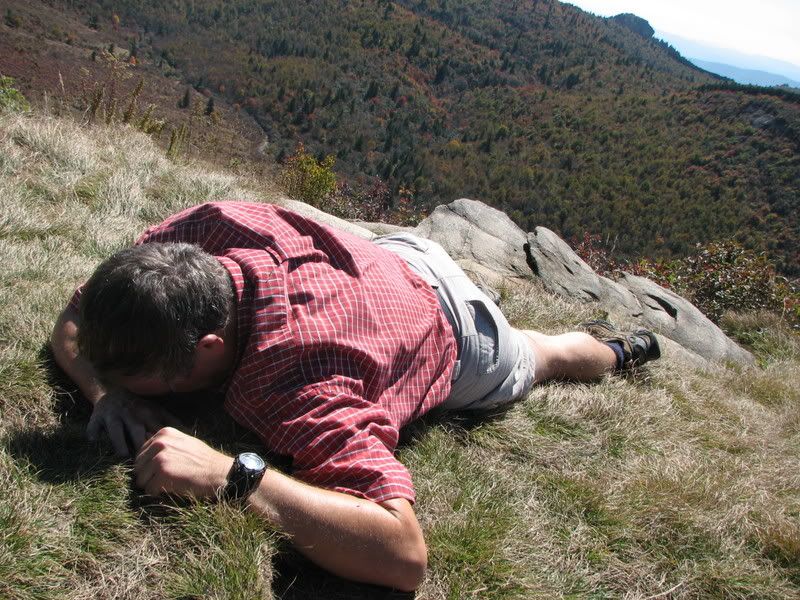
I'd suspected that the views from the summit of Dripping Springs Mountain were impressive. I wasn't disappointed.

Tuesday, November 13, 2007

William F. Nolan!

When I was in my twenties, I met a young man named Jason Brock who went on to work for me in the comic shop that I owned in Charlotte, NC. Jason was extremely intelligent and quite talented, and when we lost touch I used to wonder how he was doing, what employment he found as he got older, and, later, why he wasn't famous yet.

Jason in the midst of imitating a certain sf author.

Years passed and Jason got in touch with me via the internet. He was living between Oregon and California, owned two houses, was married, had a great consulting job in computer technology, and made documentary films. I wasn't surprised.

William F. Nolan is in da house! YOW!

This week, he drove into town along with one of the all-time great fantasists of the past century, William F. Nolan, a great friend of Jason and his wife, Sunni. We spent this past evening (November 13, 2007) talking and enjoying a meal and talking some more. Nolan, in addition to being one of our great writers of fantastic fiction, is also a phenomenal mimic, and he had me rolling with his imitations of Burl Ives, Humphrey Bogart, Sidney Greenstreet, Peter Lorre, Walter Brennan, Ray Bradbury, etc. I was laughing so much that I plumb forgot to ask him much about the nuts and bolts of writing. Alas!

He let me call him "Bill"!

I was sad to see them head on, but I hope to see them all again someday soon. Jason and Sunni have some new projects coming together that I'm waiting to see completed. And the next time I sit down with "Bill" Nolan, I'll remember to ask him about his writing techniques. (If I'm not laughing too hard.)

Nolan, Jason & Sunni Brock take their leave of the Smith House on their way to the Big Apple.

Monday, November 12, 2007

The Great Smoky Mountains National Park

I made my first visit to the Great Smoky Mountains National Park at the age of 15. In fact, I entered it at the age of 15, and two days later had my sixteenth birthday at the Laurel Gap Shelter deep in the Smokies backcountry. It was June 28, 1973, and ice had formed in my water bottles overnight.

The Great Smoky Mountains National Park was formed when this nation was in the grips of the horrible Great Depression. I doubt that the will to create such a national park out of forest lands and developed communities could be done today. Perhaps we need another Great Depression to spur us to preserve that which should be preserved and do away with that which need not be saved.

In the 34 years since my first visit there, I have returned many times. Not as many times as I would wish, but quite a few. I've hiked into almost every quadrant of the Park and seen things that I wish everyone could see at least once. Just five years ago I embarked on a personal mission to view the old growth hemlock groves before they became extinct. This I did, and now most of those groves are standing as dead and soon-to-be-weathered husks where once all was green. Another crime to add to the list of offenses by Mankind.

Following are just some of the things I have seen in my many hikes into the Great Smoky Mountains National Park.

Fifteen-year-old me on my first visit, swimming at Midnight Hole on Big Creek.


Midnight Hole, 2006, with a kayaker going over the falls.

Laurel Gap Shelter. That's me inside, the morning of my sixteenth birthday, June 28, 1973.

The backcountry where Laurel Gap Shelter stands, just below the summit of Big Cataloochee Mountain.

In an old growth hemlock grove, 2004. Those hemlocks are all dead, now. I had to see them before they died.

Inside an old poplar, 2004. Mother Nature.

Alone on Charlies Bunion, 2004.

In the overwhelming green of the Albright Grove, 2004.

In Cades Cove, 2004.

The definitive peak of the Smokies, Mount LeConte.

The Chimney Tops.

The Chimney Tops, up close and personal.

(More Smokies tomorrow.)

Saturday, November 10, 2007

I Learn about Minerals

I blame Kerouac.

Mid-life crisis? I don't know. All I can tell you is that in my late 40s I finally discovered the work of Jack Kerouac and The Beats. It wasn't that I hadn't been exposed to them, but whenever I'd start to read ON THE ROAD or any of the other major Kerouac novels, the work would leave me cold and I'd quickly lose interest. Why? Hell if I know! Most people discover his fiction when they're in their teens or early 20s and it all clicks and they get a big dose of his wandering spirit and then they move on. But not me. It took decades before I knew enough to appreciate the poetry of his work.

So.

I have to blame Kerouac for getting me back into the life of wandering the hills as I had when I was a kid. Decades passed while I was married and worked various drudge jobs and raised a son and wrote short stories (that sold) and novels (that did not) and managed to avoid going backpacking. Soon after my son hit his mid-teens I gave ON THE ROAD another shot, and everything fell into place. And then it was THE DHARMA BUMS and I recalled just why it was I used to live so many nights a year sleeping under the stars.

The woods called me back.


It had been some months since my return to the hiking/backpacking scene when I decided to bag some of our highest peaks here in North Carolina. The best place to hit a number of peaks in excess of 6,000 feet (what we call our "sixers") was along the Black Mountain Crest Trail that leads from Mount Mitchell down to Bolens Creek. At about twelve miles, it was more than I had time for since I'd have to do it round-trip style and that was a grand total of 24 miles. Too many miles to pack into what I knew would be a relatively short hiking day. So I scheduled to leave from the summit of Mitchell and hike half the trail to Winter Star, making for a twelve-mile round trip hike. Well within my schedule and abilities.

The day I'd chosen, November 11, 2004, was a spectacular one for day-hiking. It was unseasonably warm and the skies were clear and almost cloudless. I'd gotten a later start that I wanted, but I managed to get to the peak of the Mitchell by 10:00 am rather than the 9:00 am I was hoping for. In quick order I parked my truck, shouldered my daypack, and started down the trail.

I knew that the Black Mountain Crest Trail had a reputation for being one of the toughest in the Southeastern USA. So I was mentally prepared for a long day of physical exertion. I was not prepared for the sheer beauty of the trail, though. It far exceeded my expectations and I kept coming to one vast scene of beauty after another as I hiked over rocky summits and passed along cliffs and walked down into deep gaps dark with balsam trees. Very early into the hike as I walked briskly along, I startled a black bear that plunged off the trail before me and ran at great speed into the forests to escape our encounter. I'd obviously startled him far more than he'd surprised me, and I was disappointed that I hadn't had time to get a photo of him.


Stopping repeatedly to set up my tripod, I took well over 100 photographs as I hiked over Mount Craig, and Big Tom, and Cattail Peak, and Potato Hill, Balsam Cone, and Winter Star. Each of these peaks is separated from the next by a deep gap into which the trail plunges and one must climb steeply to the next to achieve the summit. I was having so much fun and was so impressed by the beauty of the trail (which I had all to myself, as I encountered not a single other hiker), I didn't have time to wonder about being tired.


In a few hours I was standing in Deep Gap and looking up at the romantically named mountain, Winter Star, which I soon climbed, standing on the summit and looking north toward the half of the trail I didn't have time to hike. After taking a few photos, I headed back toward Mount Mitchell and my waiting truck.

My wife insists that I always take everything with me when I go off hiking on my own. Everything that I might need in case of an emergency. A whistle. Warm clothing. Waterproof matches. Extra water. Compass. Map. And on and on. As I was heading out of Deep Gap and back up the mysteriously named Potato Hill (it's one of the biggest and baddest mountains in the eastern USA, so why it would be called "Hill" is beyond me), I realized that I hadn't brought enough water. As I topped the mountain I finished off the last swig in my last water bottle. I pushed on.


It was soon after this that the cramps hit me.

The pain in my thighs was almost heart-stopping. The tendons from my knees to my groin seemed to freeze up and I was stopped in my tracks. As I stood there grimacing in pain and unable to move or take a single step, I was wondering if I was suffering from the altitude, for the entire trail lies well over a mile above sea level, and most of that being at, or above, 6,000 feet. It was only later, after talking to a physician, that I found that what had happened was that I had sweated out a lot of minerals and my body was punishing me for that. What I needed was some salt and some potassium, but at the time I didn't know that, and didn't have either at any rate.

So I rested there in the dark, balsam woods waiting for the pain to abate enough so that I could continue. The sun was beginning to set and I still had several miles to go to get back to my truck. The thought of being stuck on this tough trail in the dark was most unappealing.

As soon as the pain subsided, I began to hike again. Within a few yards the cramps came back, with a vengeance, and I was stopped yet again on the steep, rocky slopes of Big Tom Mountain. The Black Mountain Crest Trail was not going to let me get back to my truck without a struggle, it seemed. All I could do was stand there and let the cramps fade and try again.


This went on, time and again, as I hiked the extremely steep slopes (sometimes needing all four limbs to continue onward), achieving peaks and then dropping down again into plunging gaps before tackling the following mountain. I was worried that I wouldn't make it back to my truck before nightfall. In addition to the idea of hiking in the dark (I had a headlamp in my pack, which allieved some of that worry), I knew that the Park Service closed and locked the gates at nightfall, so I'd be locked in if I didn't get out in time.

By the time I reached Mount Craig, with its exposed summit and looming cliff faces, I could see Mount Mitchell. The skies were ruddy with the fading sun and I knew that I still had more than a mile to hike and the cramps kept attacking my legs at frustrating intervals. The thought of the full water bottles that awaited me at my truck kept me pushing on. In the hollow between Mount Craig and Mount Mitchell, the sun was having a hard time reaching into the dark balsam woods. It was easy to realize why this range is called The Black Mountains. But I knew that I was almost home free.


In the last of the fading light, I finally came out of the forest and reached the parking lot below the summit of Mount Mitchell. I opened the door and grabbed first one, and then a second bottle of water and guzzled them. The cramps begant o subside as I got some moisture back into my body. Going to the bathhouse at the mountaintop, I changed into some clean clothes, then went back to my truck and headed down into Asheville for a meal and the long drive back home.

Since that trip, I've added a few things to the kit that I take with me when I hike:

aspirin and vitamin tablets.


Thursday, November 08, 2007

Panthertown Valley, Again

On one of my subsequent visits to Panthertown, I spent three days and two nights totally alone in the valley camping, hiking, and exploring the maze of trails. It was late September, just after the remnants of a hurricane had dropped untold volumes of water over the North Carolina high country and the Valley was posted as "closed" due to high water and wind damage. However, a ranger had told me that the closure was lifted and it was okay to venture in. But no one took down the closure signs and so I had the place to myself for the duration. Just me and the coyotes who would come down to my campsite every evening between 7:00 pm and 7:15 pm and serenade me with their eerie music.

One thing about Panthertown Valley is that there is no official trail system there. The only trails were hacked in by various folk over the years and some were maintained by a local until he got too old to continue. So you have to be sure to get the GUIDE'S GUIDE TO PANTHERTOWN VALLEY before you go tramping about in there. Without that map, it's almost certain that you'll get lost in the huge numbers of criss-crossing trails made by wandering hikers, hunters, fishermen, deer, bears, etc.

This was one of the side trails that I happened upon while heading toward Shelton Pisgah Mountain. I wandered down it a distance before heading back up. It dead-ended at a dropoff above a stream. Bear trail? Not sure. I had to hunker down to maneuver through it.


I always like to bag new peaks when I'm hiking, and there were lots of new mountains I hadn't hiked in the ring of ridges that form the sides of Panthertown. This was my self-portrait taken on the event horizon on the cliffs of Blackrock Mountain.

Some of the debris I had to maneuver around. Trees knocked over by wind and water were all over the Valley on that trip.

The weather, a closure sign, and circumstances allowed me to have Panthertown Valley all to myself for three days. It'll never happen again, I'm sure.

One of the many fords I had to make as I tramped around the Valley.

I found this pool down in the area known as "Devil's Elbow". As the temperatures had risen considerably (it was October 1st), and I was tired and sweaty from all my hiking, I chose this place to take a quick dip.

Yet another of the dark tunnels leading Bog knows where. I crawled down this one until I heard rapids crashing below me.

A view of the Valley from near Salt Rock Gap. From here, you can see the scar of the right-of-way that Duke Power raped through the forests. Thanks a lot, Coroporate Assholes!

Tuesday, November 06, 2007

Panthertown Valley


The southwestern corner of North Carolina is rich with natural history. It's a world of tortured terrain consisting of mile-high peaks and plunging valleys, untold numbers of waterfalls, rushing mountain streams, looming granite walls of exposed rock, a rich growth of plants and trees that rival the Great Smoky Mountains, and all of it nearly ruined and wrecked by rampant development, urban sprawl, and the ever-present stench of Mankind's destructive ways.

On August 19, 2004 I made my first visit to a tiny bit of this part of North Carolina that is relatively undisturbed by the suburban sprawl that is eating away at this land like a runaway cancer. Several thousand acres had somehow lain unpurchased by developers--a vast U-shaped high elevation valley full of rocky peaks, deep forests recovering from the turn-of-the-century rape by logging companies, but in a near-wild state. There were moves afoot to get these several thousands of acres into a wilderness designation and into public hands. But the Duke Power Company, with its bottomless pockets, stepped in and grabbed Panthertown so that the corporation could slash a powerline right-of-way down the very center of the valley. After they had done this, they "generously" handed over the remaining halves to the National Forest system as a supposed gesture of good corporate citizenship. They even got a lot of mileage out of this trickery as if they'd done a good deed.

If one can try to ignore the horrid slash down the middle of Panthertown, it remains a place of startling beauty. After you drive past the sprawling high-income subdivisions and the estates of multi-millionaires standing out like sores all over the slopes and atop the ridgelines, you can park along a Forest Service Road and stroll into this tiny remnant of wilderness.

On my first trip into Panthertown, I saw just why it is so admired by so many. Plutons lift up from the level valley floor and offer amazing views from their rocky summits. Waterfalls seem to be hidden around every bend in every stream. In the deep valleys, the air is alive with the sound of rushing water. The forests are not old, but are green and beautiful nonetheless. If you know where to look, it's not hard to find bear tracks, and at night you can be serenaded by the coyotes that have taken up residence there.

I spent that first day hiking over and around Little Green Mountain, discovering various waterfalls, and swimming in the cold pools at the base of Schoolhouse Falls. I pretty much fell in love with the place, but don't visit it as often as I likely would, for it's painful to see the inexorable ringing in of the valley by the constant crush of subdivisions that will inevitably close it in, making of it nothing more than a pathetic urban park.


Near the summit of Little Green Mountain the fragile mosses are intact and untrampled.

Lichens, mosses, grasses, and water conspire to reduce the mountain to a plain.

Greenery and stone and this old stump combined to create a pattern that I chanced upon. The last time I visited this spot, the stump was gone, likely burned in the campfire of some moron.

Schoolhouse Falls. Even on the hot August afternoon, I found the waters in this great pool to be among the coldest in which I've ever been swimming.

Sunday, November 04, 2007

Beautiful Places, Singular Moments

I'm going to post a few photographs over the next few days of some spectacularly beautiful places I've visited in the past few years in my hikes, mainly in the Southern Appalachians. Just unique instants in time when Nature put together all of the ingredients to present me with a scene of beauty that stopped me in my tracks.


I took this shot on the Rainbow Falls Trail on Mount LeConte in the Great Smoky Mountains National Park. It was March 05, 2005. When I'd started the hike in Gatlinburg Tennessee earlier that morning, the temperatures at 1200 feet were in the 50s. By the time I got near the 6,593-foot summit of LeConte, it was below freezing and the mountain was buried beneath the 17-inch snowfall that came down the night before. And the clouds were still dropping mild flurries as I hiked along. Mount LeConte is one of the most amazing mountains in the eastern USA, and I never tire of exploring its slopes.


This is LeConte Lodge, as seen from the trail leading to Myrtle Point near the summit of the mountain. Taken on the same trip as I was hiking up to the exposed rocks of Myrtle Point. I've long wanted to spend a night at the hike-in lodge, but have never been able to land a reservation. I hope to finally do so this year.

Friday, November 02, 2007

The Tree What Almost Got Us

Back in January of 2006, my wife and son and I packed up the Casita trailer and headed to Davidson River Campground in the Pisgah National Forest. I planned on doing some hiking and we also intended to visit Asheville, a town my son adores. We had gotten a late start and so didn’t arrive at the National Forest campground until after dark. As it was late, I couldn’t see well enough to back into the spot where I was supposed to park my trailer. So I decided to just leave it on the asphalt pull-through until the next day.

During the night, an intense cold front came through. We awakened to extremely fierce winds that were tearing through the campground. Later, we learned that the winds hit hurricane force and exceeded 70 mph. As we lay in the Casita listening to the sounds of the wind, there was a sudden smashing noise and a vibration ran up the ground, and into the trailer. I jumped up and opened the door to see what it was.

A large pine tree near the trailer had snapped off almost at the base and had missed us by only a few feet. As I stood there looking at it, I realized that if I’d parked where I was supposed to have, the tree would have bisected my trailer. We were very happy that we had gotten such a late start and hadn’t had enough light to back into our proper space.

This is the tree what almost got us!

Later, touring the campground, we noted that another large white pine had fallen on the bathhouse, penetrating the roof and causing quite a bit of damage there. Fortunately, the windstorm was short-lived and passed through in quick order.

But we had a very close call.

The rest of our trip was great. I got in a lot of hiking, bagged a few peaks, and we had a wonderful time walking around Asheville during a snow flurry that made the visit a lot more memorable.


This is the beer that helped me forget about the tree what almost got us. (At the Mellow Mushroom in Asheville--highly recommended!)

Tuesday, October 30, 2007

My Fiberglass Sedative

Over the years my wife and I found that the best way for both of us to enjoy the outdoors was to visit nice campgrounds that I could use as a base from which to day hike, since Carole doesn’t care for the tough hikes I generally take. So we bought all of the camping equipment a family needs to have a great time in a state park, or National Forest campground. We had a great tent, a canopy for the picnic table, lanterns, stoves, cots, sleeping bags; we had the works.

In our time as campers we hit dozens of state parks and National Forest Recreation Areas, in addition to several National Parks. We were generally having a great time wherever we went, even when the weather didn’t cooperate, such as the time we experienced sub-freezing temperatures and snowfall in October (in West Virginia), and unseasonably cold weather and extremely high winds one May (Shenandoah National Park). No matter what, though, we managed to have a good time.

Two years ago, however, we were camping at the Standing Indian Campground near Murphy North Carolina. This is an amazingly beautiful National Forest campground and we had a great spot right by the river. At night we would fall to sleep to the sound of water rushing over polished stones. It was great.


(Our last all-tent campsite.)

Until, one evening at around midnight, we were awakened by a loud crashing noise. I immediately knew that it could be only one thing: a bear. Whatever it was, it was trashing our campsite, despite the fact that all of our food and food items were packed up tight in our truck. I grabbed a flashlight and pointed it out through the door of the tent at the picnic table and, sure enough, an enormous black bear was hovering over our picnic table while scattering all of the things we tend to leave out in the night—things that are not associated with food, but which the bear was trying out anyway.

So I did what one is supposed to do in such a situation. I came out of the tent, put the light on the bear, and shouted for it to leave. Indeed, the bear did leave, vanishing into the thick rhododendron that hemmed in the campsite. We came out of the tent and began to clean up. I was on one side of the picnic table and my wife on the other. After a few minutes of tidying up, my wife screamed as the bear reappeared, shoving his enormous head out of the brush right beside her.

This was too much, as I realized that this bear was just too big and too aggressive to face down a second time. We scrambled into the cab of the truck and watched the bear for a few seconds. I decided to start the truck, with an idea that I might even try to nudge the bear away with it, but as soon as the engine fired, the bear took off in great haste, racing down the campground loop road in front of us. We waited for a bit and then got out of the truck and finished cleaning up and returned to our tent. My wife went right to sleep, but I wasn’t able to nod off until a couple of hours passed.

The following morning we learned that the bear had traversed the length of the campground (188 campsites!), hitting many along the way as he scrounged for food. Even though all of our food was secured, he wasn’t going to pass us by without checking to open up everything he could grab that looked as if it might harbor something good to eat. Since we didn't want to be something good to eat, we decided that it was time to ditch the tent and buy some kind of trailer.

For some months, Carole and I had been contemplating purchasing a travel trailer. We’d considered a number of options, including a pop-up, a hybrid model, and a 21-foot aluminum model. But a friend at work showed me a molded fiberglass RV he’d purchased and we were sold on the trailer he had:

The Casita.

At only 17 feet in length, it’s small enough and light enough to be able to be towed by my V-6 truck to any of the very out-of-the-way National Forest campgrounds that we prefer. In addition, it’s self-contained and has a complete bathroom in case you’re staying somewhere a bathroom is not available (the case in many National Forest sites). So we went with the Casita, and picked up our very own in August 2005. Since that time, we’ve taken it camping up and down the east coast and all over the high country of the Appalachians. It has been nothing but a delight and has made camping not only as much fun as before, but also far more secure. I can’t recommend these fiberglass trailers enough. Whether you buy a new Casita, Scamp, Escape, Bigfoot, or one from a new manufacturer, or a used model from one of a number of out-of-business companies, you are going to be sure to have a quality trailer that will give you many years of camping pleasure.


At Bahia Honda State Park, Florida Keys.

Saturday, October 27, 2007

Teenage Lobotomy

When I was 19 years old, I met a guy who was about 17 at the time. He was rather strange and I didn’t care to get to know him any better, as I found his presence to be disturbing. I don’t even recall his name, but I do remember that I later learned that he was one of the last people in those days to be lobotomized as part of medical therapy.

Apparently he’d been quite wild and uncontrollable, so the family physician finally suggested that a lobotomy would be the best way to go. His parents conceded and the deed was done, the crime committed, the travesty fulfilled.

After the lobotomy, among the things he did was break into a family mausoleum in the Brunswick Cemetery, open up the urns he found inside, examined their contents (“they looked like dried up bones,” he said, “not ashes”) and then scattered the contents of those urns all over the cemetery lawn. Shortly after that he climbed up into the water tower on Jekyll Island, just off the Georgia coast, opened the hatch in the roof, leaped in, and swam around in the island’s drinking water for half an hour or so before climbing back out (I always assumed he had a rope, but I never asked the witnesses for details).

I don’t know what happened to him after that, as I did my best to avoid him and anyone with whom he ran.

Thursday, October 25, 2007

The Creators.

When I walked away from both the retail and creation side of the comic book industry more than a decade ago, I swore that I never wanted anything to do again with either. I never wanted to buy or sell a comic book again, and I’d lost the urge to write them.

And for a very long time I didn’t pay more than a bare look at the medium. I didn’t go into a comic book shop, and only visited a couple of comic book conventions to visit with a friend who was still selling old comics. Of course I still had a very few friends who were comics creators, so I would see them from time to time, but avoided the subject of comic books, save for the single exception of a pal who was making his living creating an indie comic book.

But in the last few years I slowly came out of my self-exile. I visited a few comic conventions expressly to buy some comics by folk such as Chris Ware and Eddie Campbell that I couldn’t locate in comic book shops. And I recalled why I loved comics in the first place:

The works of Steve Ditko and Jack Kirby. These two guys created almost the whole of the mythology that we’ve come to know as the “Marvel Universe”. These two fellows, together, revitalized the commercial comic book industry and their work has gone on to become an economic engine that creates vast wealth and employment for untold numbers of craftsmen, artists, clerks, executives, lawyers, technicians, and laborers (and others).

Steve Ditko created The Amazing Spider-Man and Dr. Strange and the characters and villains and plots that moved those characters along. Kirby, of course, created everything else at Marvel in those days. Thor, and Capt. America, and The Avengers, and The X-Men, and The Fantastic Four, and Iron Man, and The Incredible Hulk, and The Silver Surfer, and a world of other heroes and villains and normal folk who live in his pulp fiction pages.

And, since Ditko’s Spider-Man was my favorite comic book of my youth, I decided to begin to rebuild a set of the issues that Ditko plotted, wrote, and illustrated:

Amazing Fantasy #15 and The Amazing Spider-Man #s 1-38.

I’m moving along, assembling the set. It’s going to take a while, but I’m well on my way. I don’t want any of the issues that came along after Ditko left the book. His vision is the definitive one, since it was, and always will be, his creation. I don’t care a whit for the hundreds of issues that followed The Amazing Spider-Man #38. Ditko’s work transcends the commercial and elevated the form into true art. There is a power in those 39 issues that promote a vision and a philosophy, which is what makes his work superior to anything that anyone attempted after he left the project he solely created.

I admire that. I’d forgotten why I admired it, but now I’ve recalled it.

Steve Ditko:


Sunday, October 21, 2007

Turn Out That Fire!

I do a lot of hiking and backpacking in wilderness areas in the Southeastern USA. Mainly, I stick to the limited high country of my native South, but occasionally I will venture into low country or Piedmont wilderness areas.

One of the things that I always liked about the wilderness concept was that of “leaving no trace”. As such, these places always had rules and laws in effect that were to prevent the building of campfires. Campfires consume deadwood, create smoke, and definitely impinge on the wilderness experience for those who don’t wish to see, hear, or smell wood smoke when they’re in wilderness.

Recently, I was appalled to visit the site of a certain (asshole) wilderness writer who posted many photographs of him proudly sitting around his hideous campfires in various wilderness areas in the Southeast. Sitting so smug and arrogant and ignorant while engaging in this destructive practice of bygone days. True, I suspect that it can be a pleasant experience to sit by a campfire and stare dumbly into the flames like a moron. But there are tons of non-wilderness lands in which this can be practiced without shattering the wilderness experience for others.

For myself, I go into wilderness for solitude and to escape from the influences of Mankind (as far as I am able). I don’t want to smell wood burning, and I don’t want to see light in a place where there is not supposed to be any light beyond that cast by the moon or the stars or the bioluminescence of some wild creatures who exist there.

In past years, it was public policy that campfires were not allowed at all in any of the wilderness areas in which I hiked. Now, it seems, the rules have been reinterpreted to merely state “limit campfire impact”, which basically means nothing, save that any moron can now plunge into our wilderness areas and begin dragging deadwood and piling it up to build a stinking campfire. I suspect that such ignorant sub-normals will soon begin to chop live wood from the forests to feed such fires, as the rules that were in place have been relaxed.

Alas, the wild places are dwindling fast. Soon, they will be ruined. I have resigned myself to this very sad fact and have been doing my best to see as much of it as I can before it succumbs to the destruction we’re bringing upon it.

However, if you’re going into wilderness, do it a favor: don’t build any goddamned campfires. And don’t take your dog with you—they spread diseases against which much wildlife has no defense. Just hike in and observe it and try to leave no fucking trace of your passing. I would ask you to destroy the traces of past fire rings, but I fear this would just encourage the idiots who follow you to create newer fire rings.

Basically…please don’t be a rude, arrogant, fire-building moron.


Wilderness campsite: no campfire!

Tuesday, October 16, 2007

Pulver-ized.

Wayne Pulver
By
James Robert Smith

Wayne Pulver was my best pal
in the third grade.
Wayne was a mutant.
At the age of eight he was taller
than our teacher.
He was 5 feet 6 inches, and huge,
a belly like an ape’s.
He was happy, and friendly, and smiling
and jolly.
Wayne lived one street over.
I had to go through my back yard
past the apple trees
climb the steep hill in the neighbor’s yard
to emerge on Wayne’s street
two houses up and across the road
from his place.
Wayne had a mom
who was a lousy cook,
crunchy grits!
but a sweet lady,
an absent dad claimed by divorce.
But he had an older brother who was
cool as shit;
he built all
of the models I didn’t have—
Dracula, The Creature, Godzilla, The Old Witch,
all of the Ratfink models,
the Big Daddy Roth rods,
the Weird-Ohs
and custom stuff he created from
castoff parts he got from other
kids.
Wayne and I spent a lot of
time looking at his brother’s models;
his brother didn’t mind.
One day, we were in the front yard at
my house.
A new kid in our third grade class
walked up; a jackass,
a bully
named phil.
He was a pissant next to Wayne,
but he was aggressive and mean and bound by
CRUELTY to pick a fight with smiling, kind
Wayne.
I stood by, did nothing
and watched.
Wayne tried to avoid fighting,
but the little shit phil
insisted.
Huge, heavy, unfortunate Wayne was forced
to fight.
It was a very, very short fight.
When phil picked himself up
had fled, bloody nose, bloody teeth, fat lips,
it was Wayne who was crying.
He looked at me.
“Why didn’t you do something?”
he asked.
“Why didn’t you stand up? He would have
backed off if you’d stood up
with me.”
I could have said,
“I was scared.” But
it wouldn’t have mattered, because I’d done
nothing, either way.
So Wayne left,
And other than in class,
I never saw him again. By year’s end,
they had moved
away
forever.

Sunday, October 14, 2007

Bushwhacked

I did a lot of hiking today. I bushwhacked up Little Sam Knob, a 5,900 foot peak that has no trail on it, and so if you want to bag that mountain, you have to be creative in finding your way to the top. Then we climbed Sam Knob, a 6040-foot peak that I've climbed before. Then we climbed up to near the summit of Black Balsam Knob (where our vehicles were parked). Then we climbed to the top of Mount Pisgah off the Blue Ridge Parkway, which I'd somehow managed to avoid doing over the years.

My son took this shot of me between reaching the summit of Sam Knob and heading off for Mount Pisgah:


Oh, damn, I am gettin' old.

Saturday, October 13, 2007

The Genre Coughs up a Good One.

For most of my late youth and almost all of my adult life I have enjoyed reading and writing horror fiction. However, while I have discovered many quality works of horror in the short form, and many skillful practitioners of horror fiction of shorter length, there have been very few novels within that genre that actually achieved what I suspect their authors set out to do.

So, about ten years ago I found myself reading less and less horror, either in the short story form or in the novel format. With the contraction of the magazine markets I really couldn't locate much in the way of short horror fiction, and almost all of the novels I was picking up just left me cold.

And that sent me to looking over my vast library of horror fiction and judging it. I own quite a lot of horror anthologies and collections and I attempted to reread material that had held my interest in earlier times.

On resurrecting this stuff, I found it better left in its pulpy graves. No new authors have appeared recently that have impressed me, at all. I grab horror novels in the shops and read the first chapter or two and…well, just put them back on the shelves.

Today, I walked into a local booksuperstore and walked down the aisles looking for something to buy. I read a lot of non-fiction, so buying something there wasn't going to be a problem. I read a lot of mainstream fiction, so picking out something along those lines that would interest me wasn't going to be much of a stretch. Even science-fiction has produced so many good authors and interesting ideas in the past couple of decades that I can almost always find a good sf novel of recent vintage that won't leave me regretting my purchase.

But I wanted to find a good horror novel, by Crom. Something with teeth. Something with wit. Something with style.

And I actually located a new book by probably the only horror writer who's walked up out of the horror ghetto in the past thirty years who seems to know how to write a good book:

Joe Lansdale.

Unlike too many writers today, the man has style. You don't have to see the name on the cover to know that you're reading a Joe Lansdale book (or short story). And, as I am out of the genre fiction news loop, I didn't realize that he had a new horror novel out there—one LOST ECHOES. I read the jacket blurb and the bare bones plot synopsis and while it didn't scream of innovation, it did grab my interest.

And then I opened it up and the book just fell open and my eyes nailed this line:

As his father said, "If it cost a nickel to shit, we'd have to throw up."

I don't know if Lansdale coined that himself, or if he heard it from one of the east Texas folk with whom he was raised. But whichever, it was a line I'd only be likely to see used (and used right) in a Joe Lansdale novel.

So I bought the book (the last copy on the shelf), and I'll have it read as soon as I get back from bushwhacking to the summit of a NC mile-high peak. Horror fiction seems to have come through with at least one book worth reading today. I reckon there's hope for that steaming, rotten, backwater, closed-up, decrepit, wandering-in-circles, dying genre yet.


Thursday, October 11, 2007

Mixed Feelings.

My initial notice of The Nature Conservancy was as a teenager when I was first beginning to think about what is commonly referred to as the Earth’s ecosystems, the depletion of same, and the negative influence of the Western world’s consumer driven economies.

In those days of my teen years, the early 1970s, I was very much interested in the preservation of large tracts of wild lands. There were various government agencies at that time involved in struggling to preserve such areas, and I was always happy to see legislation passed to buy and save as much wilderness and as much rural land as possible.

However, there began to be a lot of press for many private organizations who were active in protecting some wild places. The news media began to report on these groups, with specific attention given over to The Nature Conservancy. On the face of it, things sounded good. These people had been successful in buying up, or trading for parcels of unique and sensitive lands to lock them up in various ways to prevent them from being developed or exploited for commercial gain. Superficially, it seemed an encouraging development.

But even as a kid I was disturbed by this move away from governmental acquisitions of wild lands and toward a privately funded method of doing so. The first time I recall being truly disturbed by the actions of these private groups was in the description of how they were willing to negotiate and make concessions to gain some small advantages in protecting the core areas of some especially unique ecosystems. This bothered me mainly because, even as a kid, I’d learned that too much of working within the system and giving in to capitalist exploiters was to play into their hands. This was, in fact, a move to emasculate the governmental groups tasked with saving our wild places and making it easy for half-measures by private groups that did nothing much but enable corporations to exploit and ruin vast areas that might otherwise be saved.

To give them credit, the Nature Conservancy has, indeed, protected many wild and unique places in many nations around the world. Some truly rare systems and living organisms owe their continued existence to this group and the people who helm it. But one thing that seems central to their actions is that they generally end up protecting only the heart of a rare and endangered place. Yes, they safeguard the core of a wilderness, but the deals they cut for these small lands generally allow for the further exploitation of the areas around these limited and fragile wildernesses.

And what good does it do to protect a heart when the lungs are allowed to become diseased? What good a heart if kidneys are filled with toxins? What good a heart with livers swimming with poison? What good a heart with limbs lopped off and left to bleed?

The Nature Conservancy goes only so far in what they can do, and what they apparently are willing to do. By using specious arguments in favor of such concepts as “property rights” and “access to free enterprise”, the corporations who make obscene profits via the rape of our collective ownership of the lands that sustain us have empowered themselves to continue this rape at the cost of the rights of the citizens of this world. I have watched while the government has first given away its powers to protect our wild and rural lands, and then completely lost these powers to corporate interests. Wild and natural ecosystems cannot exist and thrive if they are allowed to be surrounded and imprisoned by walls of development and exploitation.

The Nature Conservancy is a good idea, if it had merely been a part of a much larger effort of a National (and International) movement to preserve our wildernesses and farmlands and rural areas as parks and regulated green spaces. Alas, it seems as if the Conservancy has been promoted by the corporate interests who wish to use it to their own advantages at the loss of the people of the nations within whose borders these same corporations do so much damage.

Unfortunately, the Nature Conservancy has ended up being not a part of a larger movement, but the only portion of a failing struggle to sustain life on this globe.


Tuesday, October 09, 2007

The Return of the Creature from 1957.

We went to West Virginia again. I love that place.

Late and I must go to work tomorrow. Just a quick note that we had much fun and encountered a bear in, appropriately, Beartown State Park as we were finishing up our hike and returning to the parking lot. Here he (she?) is:


Thursday, October 04, 2007

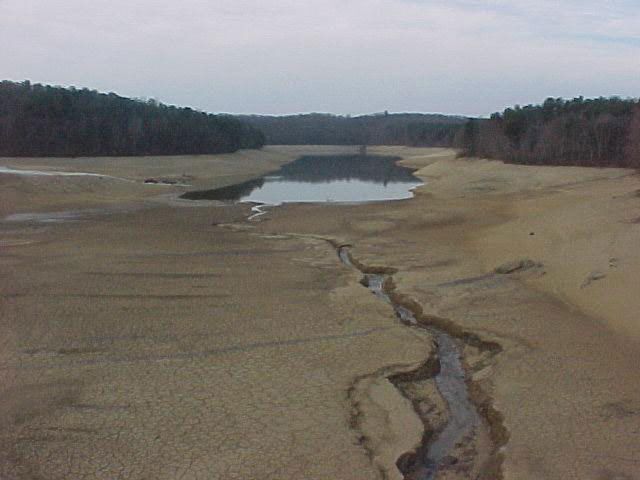
I wrote this poem five years ago just after what I thought was the worst drought I'd ever see here in the South. But here it is 2007, and we're suffering from a drought even worse than the one in 2002.

At any rate, I figured it was appropriate that I repost this poem.

Drought of oh-two
By
James Robert Smith

The clouds gathered,
overhead,
dark. And they muttered
softly, to the Earth’s
upturned face,
like a man telling lies
to a young girl,
promising love.
Then, those clouds,
dark,
like a deceitful lover,
fled over distant hills,
leaving.
And whatever had been planted,
whatever was sown,
in that parched, despairing
Earth
would just have to
make do.