Glacial lakes and glacial geology are rare here in the East and pretty much absent from even the highest summits of the South. You have to hike in the White Mountains of New Hampshire or in the very tallest peaks of Maine to see glacial forms such as hanging valleys, tarns, terminal moraines, and the like.
However, in Colorado that stuff is everywhere! The really high peaks are packed with such formations; especially glacial lakes. There are even a few fading bits of actual glaciers on some of the higher mountains. Not many of those are left--and they'll soon be gone, thanks to human-cased global warming--but you can spot what are left beneath some of the very tallest summits of Colorado.
 |
| Glacial lake on the Glacier Gorge Trail in Rocky Mountain National Park. |
 |
| The three amigos at a glacial lake, big peaks surrounding us. |
 |
| The remains of an old glacier. Now nothing but a melting permanent snowfield. Soon to be not even that. |
 |
| Looking back down at a glacial lake. |
 |
| A smaller tarn located below Chasm Lake on Longs Peak in the Rocky Mountain National Park. The falls on the right are the outflow of Chasm Lake. |
Chasm Lake. (I was suffering miserably from altitude sickness when I shot this video. I only made it to the lake out of sheer stubbornness.)
 |
| One of the most famous glacial lakes, Maroon Lake, with the equally famous Maroon Bells reflected in its surface. |
 |
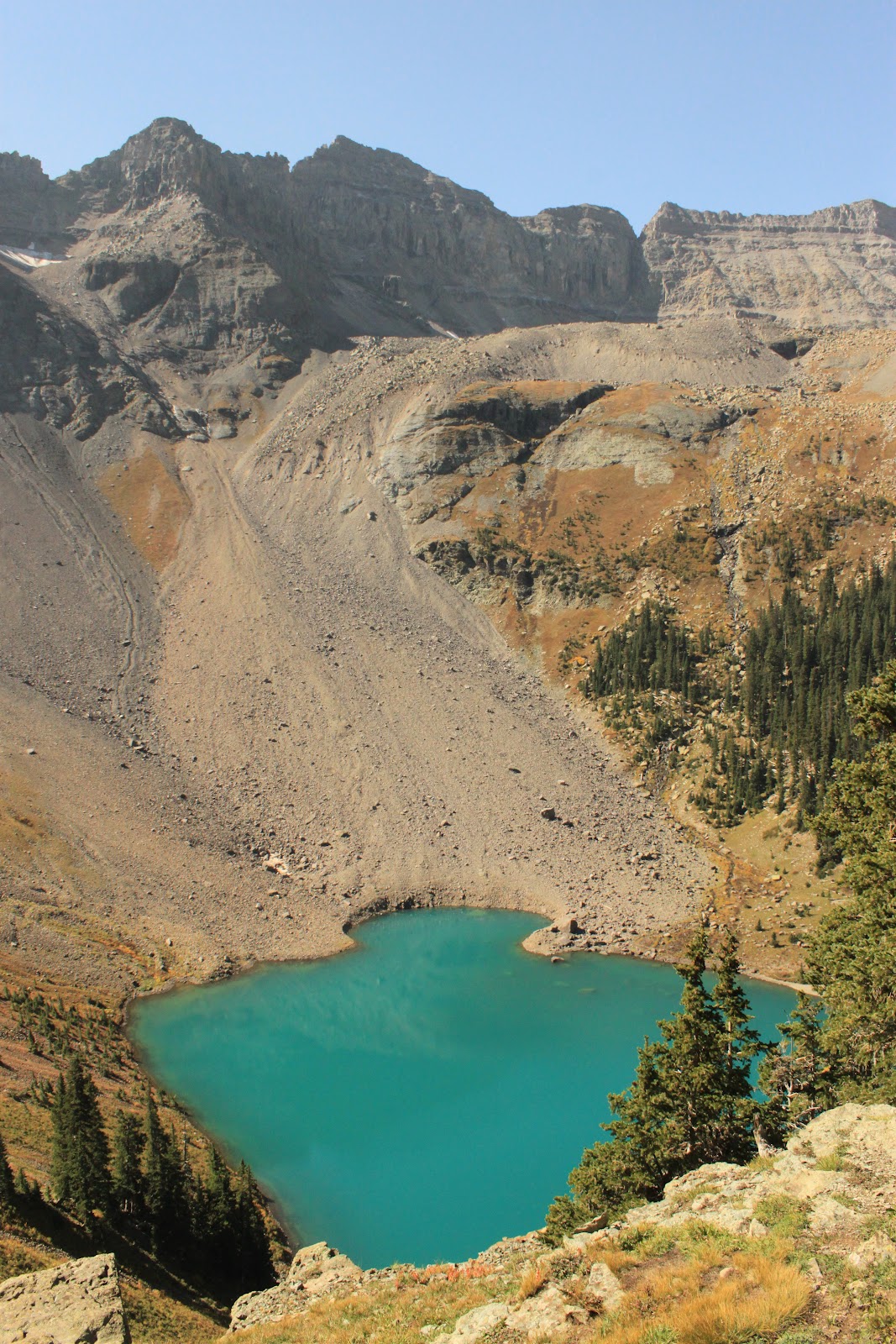
| You can even see the old glacial flow pattern leading down to Lower Blue Lake. The lake is still brilliant blue from the suspended clays in the water left by the once-flowing glacier. |
 |
| Glacial headwall at Upper Blue Lake. This is textbook image of a glacial headwall, where (once upon a colder time) a glacier was birthed at this high point and flowed down the mountain, carving out a big U-shaped valley. When the glacier melted, the valley was revealed, along with pools of water that are now glacial lakes. |
|
Video of the headwall at Upper Blue Lake.