Showing posts with label Our Vanishing Hemlocks. Show all posts

Sunday, March 08, 2015

Birthday. Casita. Hemlock plague?!

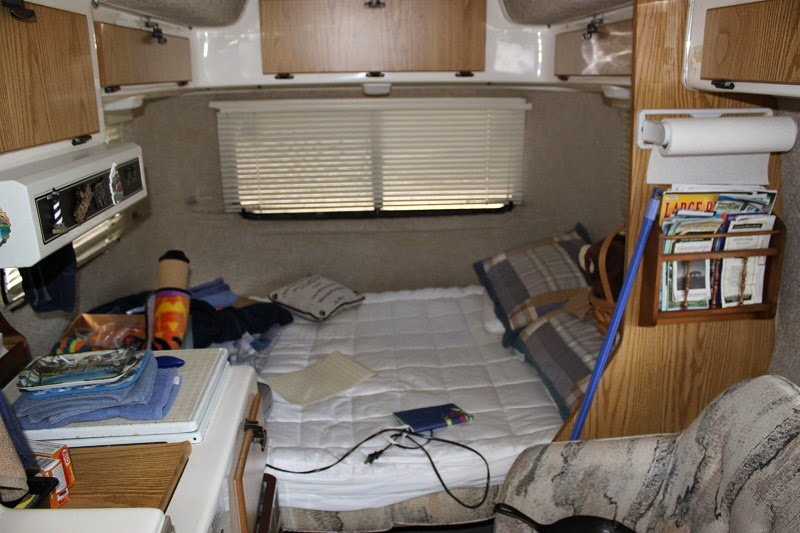
Carole and I rode out to her mom's today to celebrate her birthday. Carole's actual birthday was a couple days back, but both of us were so sick with some kind of bug that we couldn't celebrate it. So, today we headed out. Her mom treated us to dinner out and then we went to the house for cake. Later, we messed about with the Casita trailer. Carole vacuumed and cleaned and restocked some of the shelves. I got out the generator to tune it up and get it running. Today, it ran great! That was a relief. It has not given us any trouble after almost ten years!

The last thing I did was go check on the backyard hemlock trees. I examine them every time I'm there and up until now they have been free of the Hemlock wooly adelgid plague that is driving the species to extinction. But today...looks like one of the trees is stricken! Just a few days ago there was no sign at all. And today several of the branches had what looks like adelgid infestation.

However, there was something about the hemlock wool that did not look right. I took some of the wool off the tree and examined it. A kind of brown residue was left on my fingers which was something I'd never witnessed when examining adelgid wool in the past. Is it something else? If it is hwa, then I will of course treat both trees against it with one of the nicotinoid insecticides that are proven to kill hwa.

The cake.

The birthday girl!

Getting stuff ready in the Casita. First trip is still some weeks away.

I powered up the Honda generator and plugged in the trailer.

Has Hemlock wooly adelgid finally located our hemlock trees?!

Thursday, January 24, 2013

Old Growth Forests.

When I can't get into the forests and mountains, or out to a river, I have to dwell there in memories. Here, then, are some images from a bushwhack Andy Kunkle and I made into the Pisgah National Forest in 2011 to locate a grove of old growth hardwoods. (There were once grand old hemlocks there, but those are all dead now from infestation of the Asian pest, Hemlock wooly adelgid.)

The diversity of the hardwood trees is phenomenal. However, all of the hemlocks are dead and only their standing corpses remain.

A typical large Tulip poplar in the forest.

This area was the first National Forest in the USA. It was the initial tract of land that became what we know now as the Pisgah National Forest.


Sunday, November 11, 2012

Classic Southern Appalachians

A great waterfall known simply as "The Cascades". Despite the fact that the spot is often crowded during warmer months (when we were there), I like it. It's classic southern Appalachian territory with great cove hardwood forests, rushing streams, and familiar wildlife.

We'll go back.


Familiar territory for me.

The hemlock wooly adelgid has been active in this area for a long time, and so there are almost no living hemlocks remaining. That component of the lush forests is now gone. The remaining hemlocks are just huge, dead snags with a few living saplings scattered here and there throughout the forest.


The local streams are full of dead hemlocks.
A tiny flying insect of some type was busy down in this little blossom.
Butterflies were common on the trail.
Great stream to go with the classic Appalachian terrain.
Our reward for the short hike: One of Virginia's greatest waterfalls and also one of its finest swimming holes.
The author takes a self-portrait.
From above. A highly recommended hike.


Saturday, January 08, 2011

Hemlocks

I haven't written about my precious hemlock trees in a while, and considering the title of this blog, it's overdue.

When the invasive insect plague started to destroy our hemlock groves and ecosystems, our government had plenty of time to react. However, they didn't do anything of any consequence to prevent what has almost certainly become the extinction of two major species of what are arguably our most beautiful eastern evergreens.

Until we develop some biological solution to the control and/or eradication of the introduced pest--the hemlock wooly adelgid--the only thing that can be done to save our Eastern and Carolina hemlocks is to treat them with an insecticide. These treatments (generally soil injected) target the infestations of adelgids that subsist by sucking dry the needles of these trees. This was never done on a wide basis because our society would rather construct and use weapons of mass destruction to slaughter other human beings than save an entire ecosystem.

However, in a few narrowly targeted places some groves and individual trees were treated by various arms of Federal, State, and local governments (and by private individuals). Many people have ventured out at their own expense to locate and treat large tracts of hemlock forests. The most concentrated efforts at doing this have been by the Department of the Interior, generally under the National Parks System. One can find hemlock trees in National Parks and in designated sites where the trees have been treated with either Merit or Safari brand insecticides. These treatments effectively kill off the infestations and provide the trees with several years of protection against the invasive bugs.

One place where you can see trees that have been treated are along the Blue Ridge Parkway. Wherever the Park Service has determined that the views warrant protecting a few stands, they have set aside some of their meager budget for these treatments. One such place is the trail that leads from the Linville Gorge visitors center down to the overlook above the falls. Some of these hemlocks are very old and impressive trees (they were once called the Redwoods of the East), and so some of them have been saved.

Following are a few photos I took of some treated hemlocks two years ago on a hike down to the Falls Overlook:


Hemlocks that have been treated are generally marked in some way. Sometimes with a daub of paint, with a brass tag, or both.

Composite photo of an old growth hemlock tree on the trail to the overlook. (Click to see at full size.)

Carole took this one of me standing beside one of the treated hemlocks.

An old growth hemlock that had succumbed to the infestation and which could not be saved and which was subsequently cut down to prevent it from falling on hikers walking by.

Monday, January 04, 2010

I Can Feel It


Mother

Earth

Is

Dying.

Don't say we weren't warned.

I've long thought it fitting that as our hemlocks die off and slide into extinction, that they shed their bark to reveal the bloody underlying color.


Thursday, August 14, 2008

Our Vanishing Hemlocks: Film

Here's a link to the documentary of the struggle to save our vanishing hemlocks.

Hemlock wooly adelgid--the little asswipes that are killing our hemlock trees.