Showing posts with label Hugh Lofting. Show all posts

Thursday, April 14, 2016

Some Great Animal Books

For some reason people seem to link animal books to children's books. And, yes, there are many great animal books written for children and young adults. I know, because I grew up reading many such novels and short stories. In fact, I cut my reader's teeth on books and tales about animals.

Such books influence many of us in the long run. It enables us to look with compassion and even equality with the fellow creatures with whom we share the globe. This was the effect such prose had on me as I was growing older and learning to think. Humans are worthless without compassion, and a lack of compassion for other species marks us as unworthy, in my estimation.

So, then, following is a brief list of the best of the animal books that influenced me in one way or another over the course of my reading life. Some of these books I read as a child, some as a young adult, and some as a grown man. There's no real reason to the list except that each of these books has had a profound effect upon the way I think.

I will say here that I will only mention Hugh Lofting and will not actually include his Dr. Doolittle books on the list (except by this mention). I did enjoy them as an eight-year-old child, but I saw them as mere fantasy and I quickly overdosed on the more treacly aspects of the fiction. But, yes, they obviously had an impact.

BIG RED

BIG RED by Jim Kjelgaard.

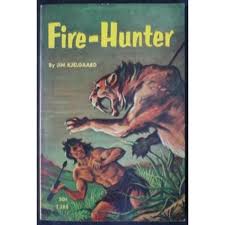
BIG RED was written by Jim Kjelgaard who is largely forgotten these days. This is a sad turn of events considering how influential his work was to a generation of children and young adults. Some of his novels are still in print today, mainly a few of the books about dogs. But he wrote many animals novels and even ventured outside his comfort zone from time to time. His book FIRE HUNTER was later purloined in grand fashion as the basis for a series of best-selling novels, sans credits.

Today, when he is mentioned at all, it is mainly for his book BIG RED. It was a tremendous best seller in its day and was purchased for film and produced as a movie by Walt Disney. You can still grab it in paperback format. As a young adult novel, high recommended.

THOR

THOR by Wayne Smith.

Another, stranger novel is THOR by Wayne Smith. This is a completely different kind of novel that bends the fabric of fiction. To me, it remains the single finest animal-point-of-view novel I have ever read. Add to this the fact that it is written for adults, and it doubles as a horror novel set firmly within the world of dark fantasy and you have a truly unique book. How many dog books introduce a werewolf into the mix?

The title character is Thor, the German shepherd dog owned by the human family with whom he lives. The reader sees the world from the eyes and senses of Thor. It is a phenomenally good book that had the misfortune of hitting the horror book market just as the horror scene in the world of mass market paperbacks was collapsing. It never really saw the audience that it so richly deserves. But it was recognized for its unique take and was optioned for film and made into a truly terrible movie that ignored everything about the book that made it worthwhile. (The less about that unfortunate occurrence, the better.) You should do yourself a favor and buy a copy of THOR.


WILD ANIMALS I HAVE KNOWN

WILD ANIMALS I HAVE KNOWN by Ernest Thompson Seton.

I could list a dozen novels here by Ernest Thompson Seton and all of them would serve well to illustrate the power of his work. Again, we deal here with a man whose work was once amazingly popular and influential to at least two generations of American readers. To me, the shadow that has fallen over his memory is about as sad a commentary on popular literature as any I could name.

Seton was a true polymath. An illustrator, a painter, a journalist, an outdoorsman, a historian, and a writer of fiction. Probably his most famous book remains WILD ANIMALS I HAVE KNOWN. It's a collection of short stories that feature tales of various species of animals. As I have mentioned in previous essays, even Seton's title makes it stand apart from all other animal tales that came before it. We see here that he has placed animals as persons and not as objects. These are characters whom he has known. Not watched, or observed, but known.

And all of those personalities stand out in each story. These are animals who make decisions and who journey and adventure and play and think and feel! On one level Seton's work turned millions of kids into enthusiasts of science and nature, and in many cases it turned those same kids into lovers of wildlife. Without Seton, where might we have otherwise stood?

MONARCH OF DEADMAN BAY

MONARCH OF DEADMAN BAY by Roger Caras.
As near as I can tell, this book is out of print. A pity.
The novel MONARCH OF DEADMAN BAY is at the very top of my list of favorite animal books. It doesn't hurt that my personal totem animal is the Alaskan brown bear. And the protagonist of this novel is a particular beast we come to know as the king of Deadman Bay where he rules the land.

A unique aspect of the novel is that there are pretty much no human characters in the novel. Yes, there are humans who appear from time to time, but they are only there as set pieces, fragments of the environment though which the Monarch strides, avoiding at all cost. We both sympathize with Monarch and empathize with him and are left to cheer him on as he lives and makes his choices in this dab of wilderness in a world that is inimical within and without. Even a beast who weighs close to a ton has to tread with great care.

Again, this is a novel that is largely forgotten these days, and sadly so. As I said, it is easily the finest animal book I ever ever encountered. Find a copy. Read it. You will not be sorry.


Monday, December 02, 2013

Literature and Me

My parents always had books around. Tons of them. Even before they became booksellers there was always ample reading material around for me. My initial memories are of comic books.

 Here, then, are the literary influences that stuck in my brain throughout my life. Not necessarily the most important influences for me, but the ones that made initial impressions. Starting from as far back as I can remember.

The first comic that I can recall reading was the Jesse Marsh version of JOHN CARTER OF MARS from Dell Comics. I couldn't have been older than four or so when it was given to me. The next comic that I read was FANTASTIC FOUR #4. Again, I must have been five...it was before I entered first grade.

By the time I was eight I had discovered Hugh Lofting's DR. DOOLITTLE books. My mom watched me consume those and she gave me a copy of Bradbury's THE ILLUSTRATED MAN. Scared the shit out of me, and cemented a life-long love of horror. Then I discovered Ernest Thompson Seton and learned a respect for wild animals and later, I developed a love for our fellow creatures.

My dad gave me a copy of Darwin's VOYAGE OF THE BEAGLE when I was nine. That began a love of science and learning and initiated a constant thirst for knowledge and kindled what I can only call a hatred for religion.

After that, of course, it was one discovery after another without any direction from my parents. I was too busy finding my own works to read. And of course it never stops. I'm always searching for the next writer to engage my imagination and to inspire my sense of wonder.


Wednesday, November 16, 2011

Childhood Reading

All of us who write are, of course, influenced by other writers. And as far back as we were able to read some writers stand out.

For me, the writers of my childhood who helped put me on the path to being a writer are still foremost in my mind. Some authors were suggested to me by my parents, but I think the ones that I enjoyed most as a kid were the ones who I discovered on my own. And so, here is a list of the writers who amazed me and fascinated me and actually made me want to convey my own thoughts into passages to be read by others.

Jim Kjelgaard is one who I recall as an effective and insightful writer of children's books. He wrote about things that I enjoyed even when I was very young--the outdoors and the creatures who share the Earth with us. His style was very stark and no nonsense, but there was sometimes a softness to it that appealed to me. His novel that stands out the most and which I never forgot is FIRE HUNTER. Herein he tells the story of a primitive caveman who--in bouts of brilliance and good fortune--discovers how to make fire, to make throwing sticks, to domesticate dogs...Kjelgaard in a display of pure brilliance put into the lives of one prehistoric man and a single prehistoric woman shows how we might have made the initial technological discoveries that set us apart from the other animals. And may I point out that Mr. Kjelgaard did this decades before Jean Auel followed him.

Kjelgaard did it first.

I've written about Ernest Thompson Seton before, but I can't go too many years without mentioning him. More than any writer, his work had an enormous effect on me. Here was a man who had actual respect and compassion for our fellow creatures. He showed me that things such as prairie hens and cottontail rabbits and yellow dogs and powerful grizzly bears had feelings and emotions and personalities the same as people. I'm not sure how I found his books, but the first one I read was BIOGRAPHY OF A GRIZZLY. Here was a tale about an animal whose life was packed with misfortune and wealth, with pathos and joy, with danger and triumph. Here was a bear with a name--Wahb! I followed Wahb from birth to death, and not a sentence was anything less than amazing to me. I went on to read everything I could find by Seton, collecting and hoarding the novels and collections. Not a day goes by that I don't reflect on the lessons I learned from reading his books.

"Wahb smashed his skull with a single blow."
In addition to being a great writer, Seton was a masterful artist--considered one of the finest wildlife artists of his day.

The first fantasist I read--even before my mom showed me books by Ray Bradbury--were the Dr. Dolittle books by Hugh Lofting. Here was a series devoted to a man of learning who could, quite literally, talk to the animals. From the moment I read the first line of the initial book I was captivated. Here was pure fantasy, not the more realistic material I enjoyed by other writers, but flights of fancy. And, as with Seton, the author also illustrated his own work with drawings wonderful enough to please any kid who found them. I found the first Dr. Dolittle book in the school library the first day of the third grade and I continued to check them out until, at last, I finally outgrew the stuff. But I never forgot it, and those tales hold a special place in my memories.

Good old Dr. Dolittle. Hugh Lofting was the first writer I ever overdosed on. I finally reached a point where I couldn't stomach one more Dr. Dolittle novel. I must have blazed through about seven or eight of them before they lost that initial charm.

Another writer who grabbed my attention was Evelyn Sibley Lampman. And, of course, it was her best-selling novel THE SHY STEGOSAURUS OF CRICKET CREEK that stopped me in my tracks when I pulled the book down from the shelf. Wonderfully illustrated, it told the story of a talking stegosaurus discovered by a pair of kids out hunting for fossils in a western desert. Ms. Lampman was another one who had a way of speaking to kids. And more, she taught me that there were other human points of view than those I heard each day there in my Decatur Georgia neighborhood. Some people lived on ranches in the big sky country, and some kids were Indians who lived on reservations, and not everyone spoke English and listened to Dixie as if it were the national anthem.

Sometimes a wonderful kid's novel is perfectly paired with a terrific and talented artist. So it was with THE SHY STEGOSAURUS OF CRICKET CREEK (art by Hubert Buel).


This illustration astounded me when I was eight years old. It still does...


Monday, June 02, 2008

Point of View

Some of my fiction is told from the point of view of non-human animals.

Well, frankly, a lot of my fiction is told from the point of view of non-human animals.

The reason for this is because I have always sympathized with animals. And at a very early age I discovered the work of a gentleman named Ernest Thompson Seton who was an enormous influence on me, if not stylistically, then very much philosophically. Seton understood that many of the animals with whom we share this rock are possessed of the same depth of emotion, as are humans. They feel fear and hatred and love and are inquisitive and pursue happiness just as we do.

Over the years I’ve encountered just a few authors who seem to feel this way. There was, of course, Seton. But before I found the old Scot, there was Hugh Lofting and his silly tales of Doctor Doolittle that also appealed to me, if on a different level. I outgrew the children’s fables of Lofting, but never forgot the lessons taught in the fiction of Seton.

Everyone who shares space with a pet can tell you that they have experienced things that allow them to understand that these animals have feelings very similar to our own. The dog who comforts you when you’re sick or sad. The cat who cuddles beside you at bedtime. The parrot who figures out how to unlock her cage to explore the house at will. If you share a home with a pet you will assuredly come to understand that they are far more clever than you ever suspected and as possessed of the same range of emotions.

My wife and I had a Siamese cat named Cinnamon. She lived to be well over twenty years old and continually fascinated and amazed us with her antics and achievements. We are both convinced that she had a pretty wide vocabulary. We learned early on not to say the word “veterinarian”, else she would find a place to hide before we could whisk her away for medical treatment. Every morning she would hop up on my side of the bed, reach for my glasses on the bedside table and knock them to the floor. Why did she do this? She did this because she knew that by knocking my glasses to the floor that I would have to climb out of bed to retrieve them. And, generally, once out of bed I would almost always shuffle to the kitchen and open her a can of cat food. Get the big galoot up, and breakfast was assured. Knock the glasses off the table, and the big ape would rise. In effect, she had me trained.

If Cinnamon wanted out, she would only have to go to either the front door or back door and park herself in front of it. There, she would stare up at the doorknob until one of us opened the door for her. She couldn’t say the word, but she figured out another way to communicate the idea.

Another thing that Cinnamon would do is, if I ever left the kitchen without feeding her when she was hungry, she would chase me down the hall and wrap her paws around my ankle. No claws. Just those soft, furry paws in a clench about my ankle. Of course I would turn around and go feed her.

We currently have three cats. Marley, the stray we rescued who is a lazy, laid-back male. Lilly, the new kitten who already seems amazingly intelligent. And we have Sophie, who is nine years old and, as far as we can tell, as crazy as Mary Todd Lincoln. Although she has never known anything from us but love and devotion, she flinches at the slightest sound. She will climb up on the bed to spend the evening, but will only lie at my feet and refuses to advance any farther up the mattress. When I walk down the stairs, she will race ahead of me and fling herself on the landing and scream for attention and will only stop howling if I also pause to sit beside her and pay her lots of attention. Sophie is not terribly bright, but she is devoted to me.

If one spends any time watching wild creatures, there will also be many signs of the emotional depth present in them. I spend several weeks every year in various state and national parks. We have the great fortune to encounter lots of animals whenever we travel to rural or wild lands. I have witnessed some amazing things in watching these creatures going about their lives. Even such things as ghost crabs have surprised me in exhibiting actions that I can only interpret as emotional on their parts.

So it's no wonder that I've spent so much time filling my novels and stories with animals who are sometimes as emotionally extravagant as any human being.

Chimp as person

A certain hairless primate and his offspring swimming in Jacob's Fork in the North Carolina mountains twelve years ago.