Most writers I know are self-conscious and pretty darned critical of themselves and their work. This is a good thing in some ways, but should be kept to a minimum. I also know some writers who are totally ego-mad and who do not look upon their work with a critical eye at all. This is also a bad thing, except in the rare occasions in which they actually deserve the praise they lavish on themselves. But this latter is an extreme rarity.
For years I would worry that I was not only not creating fiction as well as I could, but that my work didn't measure up to what I read from my favorite authors. This is probably the worst thing that a writer can do to himself. The chances are that your favorite writers are pretty damned good and display tremendous skills and stunning insight. (There are exceptions. You may have no taste and your favorite writers are awful, in which case you're safe and sound.)
The thing is--to make a baseball analogy--some authors are like Hank Aaron and can crush the ball out of the park on a regular basis. There are those rare dudes who can slap a homer all of the damned time. These folk are rare. For me, such folk are Hemingway, Bradbury, McCarthy, Gifford, Bukowski. Don't try to match what they do, because likely you're going to either end up producing thin, watery copies of their styles; or you are going to fail miserably and create something that doesn't deserve publication.
The past couple of months I have been reading a lot of science fiction from the 1950s, much of it written by some truly talented authors; men with well-deserved reputations for excellence. However, I was surprised when most of these stories were not the sparkling gems that I had read from their pens over the years. Slowly, as I read the volumes, I realized that in general they wrote stuff that was entertaining, but mediocre. They were professionals in every way, so the stories were almost never what I would call "bad". But mostly they were only barely over the line into territory that I would call "fun", but hardly brilliant. And definitely not home runs. A couple of triples were in there. Some doubles. A whole lot of singles. And a few walks.
So here's what I took out of all of this.
Don't try to slam a homer out of the park every time you sit down at the old screen. Sure, it happens. And it happens a lot if you're the equivalent of the best among us. But if you're not, then just sit there and work on the project and get it out to the markets where it will hopefully see print. Be happy with sliding into third, or getting a stand-up double, or a close reach to first base on a bobbled catch in the outfield is even okay.
Work at it. Be a journeyman. Hone your skills. Eventually, you'll hit some homers. You might even become a star.
A lot of fiction heavily influenced my life in general, my life as a reader, and my life as a writer. Since I now make a decent paycheck now and again with my own fiction, that third influence on me is often foremost in my mind.What books pushed me to write later in life more than others? At some point I discovered the works of Charles Bukowski. At first it was his short stories that grabbed me, and then I moved to his novels, and then his poetry. Bukowski was an original. He made everything he did seem easy and casual, but that's not the way it was, at all. Underlying everything that he wrote was a humor and a wit that were both as sharp an insightful as any I've encountered. A lot of other writers try to imitate him, but no one succeeds at that. Don't try.I also found Cormac McCarthy at some point. The first thing of his that I read was
  BLOOD MERIDIAN. It made quite an impact on me, and I've continued to read just about every novel that he produces. Some others are almost as powerful as that first one, but none of those have influenced me quite so much as that one. His style is another that one should not try to imitate. It's not that it can't be done--Charles Frazier did a passable patch on McCarthy with his COLD MOUNTAIN--but no one else can quite capture the world that McCarthy can conjure. Again, my advice would be to not even try to copy that style...and certainly don't compare yourself to Cormac McCarthy--this is a bit of hubris I've seen out of a few authors. Silly chaps.I came upon The Beats rather late in life. I was well into
  my forties before I "discovered" them. It wasn't that I hadn't tried reading the work of that group of creators before I was older--but the fiction never held me for more than a few lines or pages, and so I'd cast that stuff
 off. Finally, though, I picked up ON THE ROAD for maybe the twelfth time in my life and, for some reason, that time everything fell into place. All the tumblers clicked. I was hooked for over a year on the fiction of Jack Kerouac, and then William S. Burroughs, and the rest of the bunch. I learned quite a lot from reading The Beats, and I almost abandoned genre fiction entirely after feeling that horrors and fantasies could never match the kind of power I was reading within the paragraphs of DESOLATION ANGELS or JUNKY. But eventually I came around and returned to what I knew best.Somewhere in those past-40 years I found Robert Graves. First it was I, CLAUDIUS
  and then CLAUDIUS THE GOD AND HIS WIFE MESSILINA. Later I sought out his short fiction and after reading a bit of that I discovered some things about how to write that left me very well educated, indeed. Graves was a bit of a nut in many ways, but he was about as skilled a writer as I have ever encountered and I learned about as much from reading his fiction as from the works of anyone else I could name.
And even later than Graves and Kerouac and Bukowski I finally buckled down to read as much as I could of Hemingway. As with Kerouac, most  of my friends had read Ernest Hemingway's work in their youth and been influenced by it as very young men. For whatever reason I found more to admire in the fantasies of Ray Bradbury and H.P. Lovecraft and Robert E. Howard and so would give up on the tempered realities of Hemingway. My loss as a young man, but there's nothing to be done for it now. Better that I finally appreciated him late than not at all. As with the others, reading his stories and novels showed me how to write more effectively than just about any of the fantasists with whom I'd been so engrossed from the age of eight through forty-two or so.Did I waste a lot of my youth chasing dragons and demons and aliens creatures? Not really.For the writer who influenced me more than any other was the crazed visionary Philip K. Dick. Most people today who know his name at all hear it because of his connection to so many film adaptations of his novels and short stories. He was, for many years, quite prolific and his mind was a vast factory of ideas. Today, he's considered the father of cyberpunk (go look it up). Some of his fiction seems dated--a product of the 1950s and 1960s and showing this in his language and condescending attitudes toward race and sex. But much of his work has stood the test of the decades since his death, and that material is as powerful now as when he first produced it.
 My favorite Philip K. Dick novel is THE MAN IN THE HIGH CASTLE. It is set in a world in which it was not the Allies who won World War II, but the Axis. Furthermore, he cast his characters in a North America that has been divided down the Mississippi River basin--the Germans in the East and the Japanese in the West. If he wasn't the first to exploit this concept, he was likely in the first tier of those using that idea effectively.But Dick goes further. Within the novel is another novel. This novel is called THE GRASSHOPPER LIES HEAVY. The characters hear about it--written by an author who has used the theme that it wasn't the Axis who won WWII, but the Allies. And in MAN IN THE HIGH CASTLE, walls sometimes break down and the boundaries of reality are changed and altered. The characters within Dick's book are left with the idea that there is another world--one in which they were the victors and not among the oppressed.This novel affected me on many levels. The night that I finished reading it, I placed it on my bedside table and turned out the light and went to sleep. Some time later--well before dawn--I came awake. Or at least I thought that I was awake. Then I realized that I was dreaming very vividly that I was lying in my bed in my own house. And I dreamed that I had just finished reading a book that I had placed on the bedside table before turning out the light. That book was, I realized, THE GRASSHOPPER LIES HEAVY.This realization so startled me that I had to get up to turn on the light to look at the book. So I sat up and reached for the light.And then I woke up. Really woke up. I was already up on one elbow reaching for the lamp, pretty much in my sleep. I knew what I was doing. For a moment, in the dark, I froze. I couldn't recall if the book by my bed was THE MAN IN THE HIGH CASTLE or THE GRASSHOPPER LIES HEAVY. Which one was it?After a few moments I couldn't take the suspense so I turned on the light and reached for the book. Picking it up, I realized that it was THE MAN IN THE HIGH CASTLE. The bad guys had not won WWII. I was not living in a world dominated by the likes of Joseph Goebbels and Reinhard Heydrich.That's what writing is all about. That's power. That's talent. It's not something I'm ever likely to equal, but it's something to reach for.Philip K. Dick may very well have influenced me more than any other author.At least I think so.
There's always a place for the genuine bad ass in Hollywood. And I'm not talking about some wuss actor who can pretend to be a tough guy. I'm talking about the guys who really are tough, who were tough. The guys who weren't completely pretending to beat the shit out their opponents when they were outnumbered.The following are my list of the toughest of the tough. The real bad asses. Ernest Hemingway would have respected these guys: Steve McQueen, the #1 tough guy in all of Hollywood history, as far as I'm concerned. Certified cool.
 Yeah, Robert Mitchum was a close second. He beat the shit out of Marines in real life.
 You had to like Lee Marvin. He really was a Marine and got shot in the ass by machine gun fire in Saipan. Most of his platoon was killt, but not Marvin. Yeah, that's tough.
 Hell. Anthony Quinn. He was siring babies when he was in his seventies. And playing the great god Zeus around that time. It fit. As a young man he boxed professionally to earn extra money and was friends with Frank Lloyd Wright. Well, shit! It just cain't get much cooler than that!
 Jack Palance. Yeah, one tough bastard. He was once 15-0 as a heavyweight pro boxer with 12 knockouts. He finally lost a close decision to a ranked contender and called it quits and was drafted. Burned in a training accident as a paratrooper, he had reconstructive surgery on his face which left him with the gaunt look we came to know on screen. The funniest thing I ever saw in a movie was a fight between him (as Toriance) and Charlton Heston (as Ed Bannon)--we were supposed to believe that Cheston could beat Palance. Right. For Palance, that was some real acting.
 Well, I have to include a couple of modern actors. I don't think I need to elaborate too much here with Nick Nolte. Shit. Yeah, we've all had a laugh at his arrest mug shot. OK, OK--it's funny. But nobody as honest as this guy can be anything other than a total badass. He's got my vote for that. Damned good actor, too.
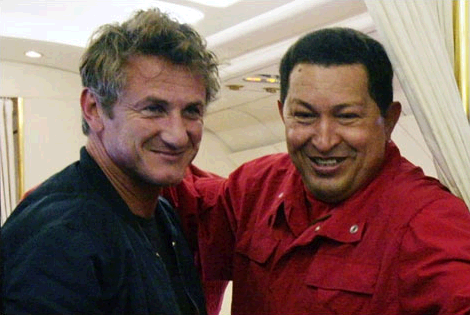
 Sean Penn is not only one of our great modern actors, he's also got a toughness that's not just projected. It's real. Has to be. It takes guts to go against the grain of the status quo, which he does frequently. Viva Chavez, baby!