Friday, November 24, 2023


Tuesday, May 24, 2022
.jpg)
Friday, January 14, 2022
They're Always Lurking.
Most of the time when I'm on the Internet and I comment on, or post anything about wild predators, some guy (it's always a male) will pipe up with a comment about killing the predator with a gun.
Sometimes it won't happen, but generally it does. If I show a photo of a bear that I've photographed on a hike, or of a coyote I've seen while in a wilderness only a moment will pass before some armed-up idiot makes a comment on how I should carry a firearm, or what kind of weapon I need to kill said animal.
And my reaction has become one of revulsion rather than of surprise or amusement. This is the kind of reaction I've come to expect from these creeps who inhabit US society. And, yes, it's always one of my fellow US citizens who reacts this way. I've never had anyone from another continent or country tell me that I need to kill some animal.
I used to wonder where this attitude of belligerence toward wild animals comes from, but now I think I understand it. It has nothing to do with negative encounters these people have had with wolves, or mountain lions, or grizzly bears. It has everything to do with propaganda. That's right. The US press isn't happy just trying to make Americans hate each other; or how we should be ready to kill Russians, or Chinese, or Mexicans or anyone else the system currently wants to demonize. They also do it to animals of all things.
When I was a kid I was interested in wildlife. I would read anything and everything I could find about wild animals. When I ran out of books to read I turned to the vast numbers of magazines in my dad's warehouse. And I gravitated to the magazines that had cover photos of bears and wolves and lions. These were, of course, hunting magazines. Usually I'd skip right past the articles about rifles and pistols and compound bows and go right to the prose concerning wild creatures: the game, as the authors termed them.
It was in those vast stacks of hunting magazines that I'd sit and read about mule deer, and elk, bison, moose, pronghorn, mountain goats, wolverines, black bears, puma, timber wolves, lynx, otters, and their vast company of other herbivores, carnivores, and omnivores. Even as a generally non-critical child I began to note a decidedly negative tendency toward any animal that was a carnivore. If the animal sported fangs and/or sharp claws it was on the writer's shit-list. And they'd pile on the hate. Bears and mountain lions were bad, and should be shot. Wolves and coyotes should not only be shot, but wiped from the face of Mother Earth.
Well, it was apparent that the editors of all of these varied hunting publications hated all predators who were not Homo sapiens. They referred to most of them as vermin. It was, obviously, paramount that such animals be cleansed from the landscape. After realizing this ridiculous tendency of the publications I ceased to read them.
But it took me a while to figure out why they were taking this attitude. It wasn't just that human hunters don't want any competition. Such people don't generally even like other gun-owners to share a few hundred acres of forest with them. (Other human hunters accidentally shoot and kill one another to a shocking extent every year. Look it up.) No, I couldn't base this endless blather of hatred toward wolves and such creatures merely on the fact that human hunters don't want canines and felines and ursids eating up their game. Sometime else was afoot.
And I realized what it was when I noticed that these magazines also had a tendency to hate government legislation that established National Parks and wilderness areas; and any law that mandated the protections of rare and endangered animals. Even when hunting is allowed in wilderness areas, these periodicals didn't support their establishment, based on some vague dimming of our rights.
At last I realized from whence these clowns were receiving their marching orders. All such publications are corporate owned. Large, ongoing publishing concerns. And each under the control not just of editors and publishers, but of executives who gather in boardrooms commanded by major stockholders. The same fat-cats who call the editorial shots are also the same people who invest their money in timber, in real estate, in mining, in drilling rigs, in pipelines.
Timber wolves and mountain lions are a threat to these human vermin. A blackfooted ferret can screw up plans to exploit an oil field. An endangered bird of prey can derail the laying of pipe. It is in their interest to demonize a predator as surely as it is in their interest to foment a war against another nation which presents no threat to us.
I haven't picked up such a magazine in decades. Not even out of curiosity, or during a moment of childhood nostalgia from the days when I was a kid hungry for knowledge and looking for information within the pages of those poisonous magazines.
But, at last, I understood the origin of the mania against predators, and I know the source of the fuel that feeds the insanity that pops up when I post a photo of a bear or a coyote.
So, to the idiots always calling for me to kill bears and wolves: grow the fuck up.
 |
| Hawk. |
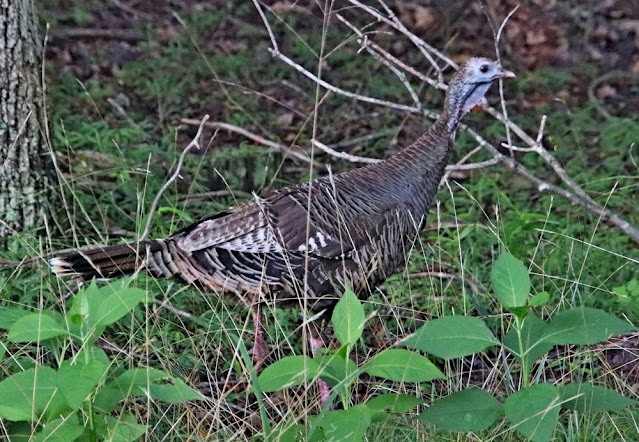 |
| Turkey. |
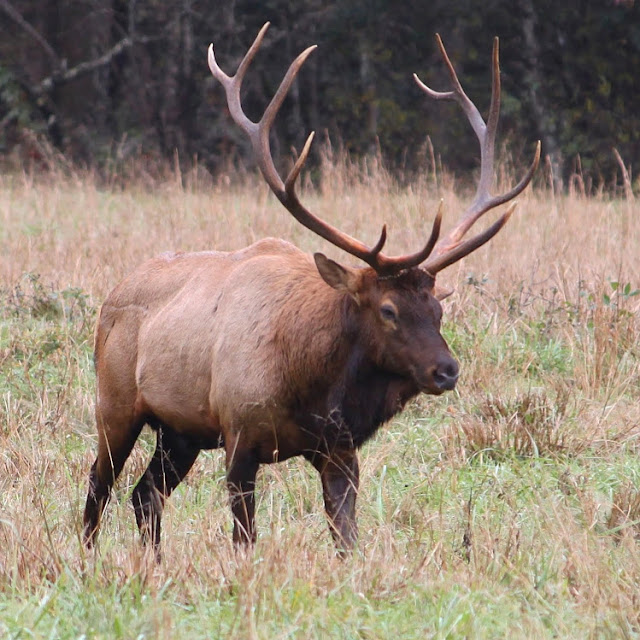 |
| Elk. |
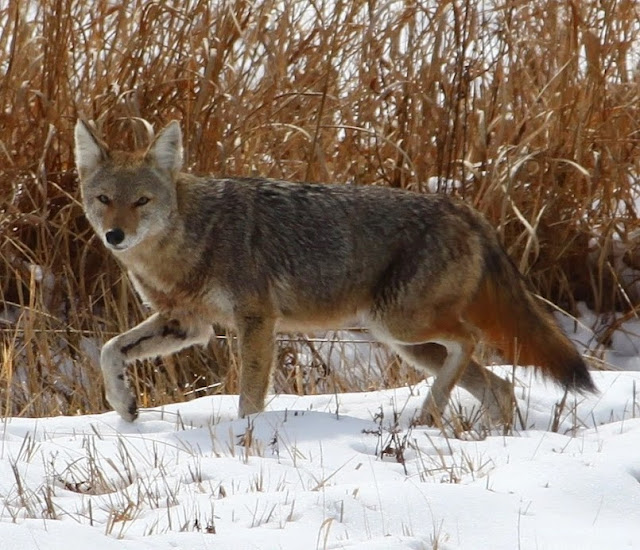 |
| Coyote. |
Friday, December 31, 2021
Last Day of 2021
Well, it's the last day of 2021.
It's been a decent year. Victories for the Smith family were measured in pleasant occurrences. Andy found a job that pays a decent wage. To celebrate, I bought him a car so that he won't have to go into a new situation having to face a monthly vehicle payment. Carole and I got a membership to the local city-owned fitness center that allowed Carole to take activity classes and for me to get back into weightlifting (in a strictly old-man kind of way). I lost weight, which is rarely a bad thing. My novel WORKING CLASS HERO was republished and has been a lot more successful than I would have thought. The sequel is almost finished (although as I write this it's five months late).
Carole retired from her old job after 31+ years. She started a new one to count out the time to her own full-time retirement on her 62nd birthday in less than two years. We make plans that we may or may not be able to see through. But make them we will.
So, I go into this last night of 2021 looking forward to 2022. I've long since stopped worrying about Covid-19 and what it means. I got my vaccine shots. I have an appointment for the booster. Medicare kicks in for me in less than six months. We're planning vacations for the year. Two or three with the travel trailer; and one, maybe two by jet. Yes, 2019 taught me to not put too many eggs in the vacation basket due to the virus and its various mutations. But we'll do something, no matter what. Worst case, we have six isolated acres 4,000 feet above sea level in the North Carolina mountains. We can park the trailer there and chill out, hike, build campfires, grill, sit in the self-contained travel trailer and take it easy deep in the forest. We'll see.
But I don't think travel is going to be the pain in the ass that it was in 2019/2020. I suppose we'll be able to take the trips we're planning. I'll continue to write. I may take a photography class to learn how to properly do what I've self-taught. There are a lot of things I have time to do now, and I hope to explore them.
I leave with this image. The last few hours before we take down the tree. I recalled this week that one of the things I loved to do when I was in grade school was to sit in front of the Christmas tree and just gaze at it. Long before I heard about meditation and what it was I was doing it. Cross-legged I'd place myself a few feet from those branches and the bright colors and just sit there, gazing, letting the sight of it take me deep into my thoughts. I told my best friend Chuck how I enjoyed that, letting the symmetry and glitter of that image take me away.
Therefore, in the waning hours of the life of this year's wonderful tree, the glittering bulbs, the ornaments, the shining star, the scent of balsam filling the room, I decided to do as I did as a child. I sat cross-legged there, transported myself decades back, recalling the sweet nostalgia of why I still adore this mad season of excess.
I love these holiday months. For me, it truly is the most wonderful time of the year. I hope to live the next eleven months in peace, finding happiness with my small family, and enter in to another such season celebrating our lives and all lives. That's something that never comes in excess.
 |
| This stuff always makes me feel like a kid, and I had a good time as a kid. That's as good a reason as any for loving the holidays, I reckon. |
Thursday, December 30, 2021
Christmas 2021
People say I'm cynical, and it may be so. The same people who say that I'm cynical tend to give me a hard time because I enjoy Christmas so much. Yes, it can be a difficult season for some, but the tradition of it and the childhood memories the holiday gave me have always made me happy. So, as an adult, I have done my best to have a great time of it every season and to try to make my family happy at that time, also. I reckon I'm not too cynical.
This was a good Christmas. We didn't have more than the average amount of hardships this year, so that means it was a pleasant twelve months. All of us are healthy and financially stable. You can't ask for much more than that.
Here's to silly trees in the house, bright lights and jolly decorations on that tree, lots of gifts beneath those fragrant balsam branches, holiday tunes playing, and having the family close.
It was nice.


Saturday, November 13, 2021
Our Autumn Vacation: Smokemont Campground, Great Smoky Mountains National Park.
Every year Carole and I take a Halloween week vacation. We hook up the Casita and try to find a place where we can view spectacular Fall color. Despite propaganda from other parts of the country, I have found that the most vibrant and varied Autumn displays are in the southern Appalachians. Other parts of the country depend on one or two species of hardwoods to paint the local landscape with color, but in the big southern mountains there are hundreds of species of deciduous trees transitioning from green to all manner of eye-popping hues.
In 2019 we went to the Elkmont Campground in the Great Smoky Mountains National Park and hit that amazing forest at its peak. In 2020 we headed a bit farther west and north and traveled to the Red River Gorge of Kentucky and once again hit those trees at full color display. The forests there are not as varied but are still amazing to see. This year, we returned to the Great Smoky Mountains, but opted to see the southern end of the Park and stayed at Smokemont Campground.
Here, then, are some of the views we were afforded on this year's version of our annual trip. We're not sure where we're going in Fall of 2022. Maybe to New England. 2023 we're going to try for a month-long journey to Colorado. Carole has never seen the aspens when they put on their annual show of leafy gold.
When we arrived we realized that our initial reservation would not allow us to use our generator at the spot we'd chosen. So we asked if we could move to a generator-friendly spot. The ranger was able to accommodate us and we got a pull-through site in Section D where we could run our generator. We don't generally run it much...mainly to charge some of the electronic devices we take with us. After the first three nights they closed Section D and we moved to our original site in Loop B. At that time, when they close most of the loops, the entire campground is open for generator use.
On the night when the cold front arrived, pushing out the persistent rains, we awakened to find that our furnace was only blowing cold air because we'd run out of propane during the early morning. When I switched tanks I realized that it was empty. So we had to make a quick run into Cherokee to get one tank refilled. I had two spares at home, both full, but had neglected to check to make sure both tanks on the Casita were full before we left. I always manage to forget something. We scooted back to the campsite and I hooked the tank back on and the furnace fired up again. I hope not to repeat that mistake!
All in all, we had another relaxing, successful Fall color vacation!


Saturday, September 25, 2021
Sidelining Martin Goodman
Continuing essay to counter the constant erroneous corporate propaganda regarding the early days of Marvel Comics.
Another thing that the Lee droolies like to do is to claim that Stan Lee was a marketing genius guiding the corporate ship known as Marvel Comics. This never happened. Martin Goodman, the publisher and owner, held Lee in such low esteem that his junior cousin-by-marriage had to clear everything through the owner (Goodman) for all but the most minor decisions. Contrary to the lies made popular by later faux-historians, you can see that Martin Goodman was a hands-on publisher who paid very close attention to all of his publishing ventures, especially to Marvel Comics. Once Kirby and Ditko had revitalized the comics publishing portion of his publishing outfit he did not want the Comics Code Authority, or muckraking journalists, to come down on him with complaints against the material he was printing. He was enjoying his resurgent economic success, while also searching for a buyer to make him a rich man. He didn't need complications and kept a very close eye on Marvel.
To paraphrase Steve Ditko: A shill is a shill.
 |
| A fiction. |
 |
| Martin Goodman, the man who actually built and guided a publishing company. |